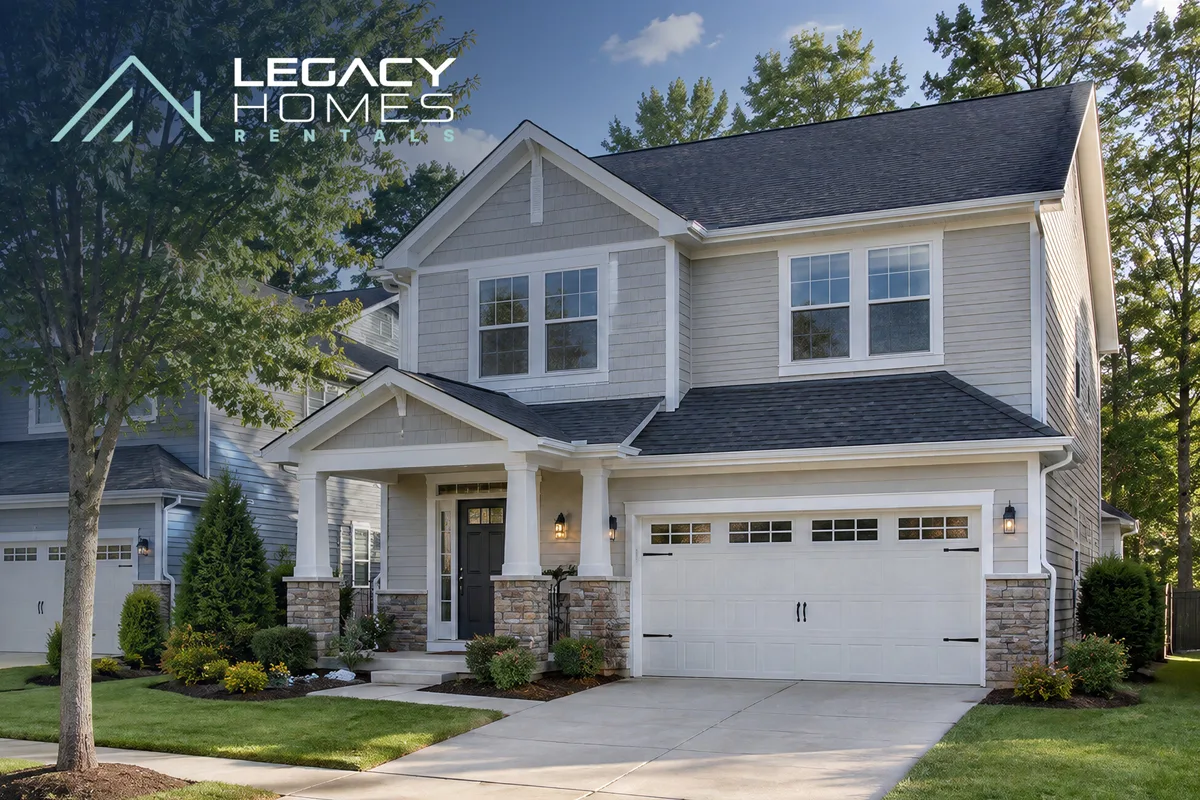
A condo is a unit you rent from an individual owner inside a building managed by an association, a townhouse is an attached, multi-level home with its own front door, and a single-family home stands on its own lot. For renters, the bigger difference is often who your landlord is and which rules you need to follow.
You can explore our available rental homes in North Carolina and Texas to see examples of different layouts and property types.
Most guides on this topic are written for buyers. This one skips mortgages and resale and focuses on what changes in your daily life, your monthly cost and your relationship with the landlord when you rent each type.
What is the difference between a condo, a townhouse and a single-family home?
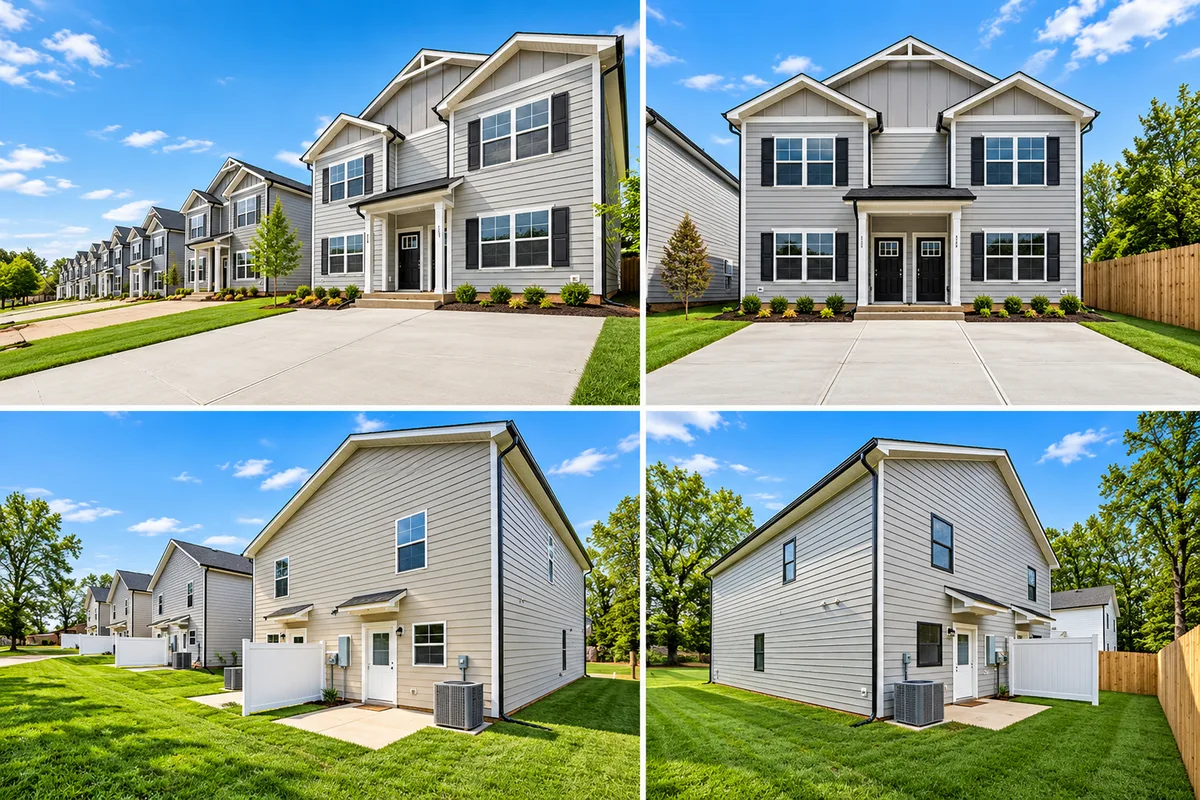
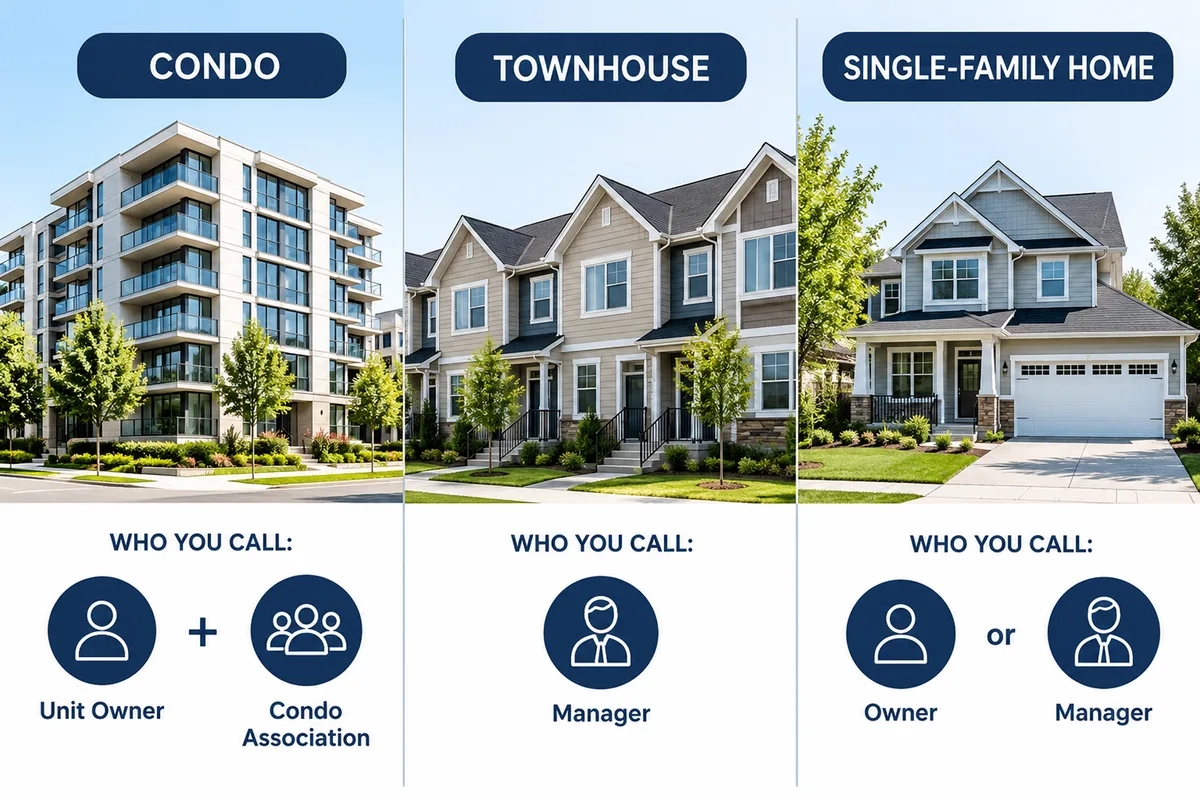
A condo is a type of ownership, a townhouse is a building style and a single-family home is a stand-alone structure. That is why the labels overlap. Any of the three can be rented, and the experience depends as much on who owns and manages the home as on the building itself.
What is a condo?
A condo, short for condominium, is a privately owned unit inside a larger building or complex where an association owns and maintains the shared areas. When you rent a condo, you usually lease from the individual unit owner. The association’s rules still apply to you as a resident.
What is a townhouse?
A townhouse is an attached home, usually two or three stories, that shares one or two side walls with neighbors and has its own exterior entrance. Nobody lives above or below you. The U.S. Census Bureau counts these as attached single-family homes when each unit runs from ground to roof with its own walls.
What is a single-family home?
A single-family home is a detached house on its own lot with no shared walls. It usually has a private yard and a driveway or garage. Renting one tends to bring the most privacy and the most outdoor upkeep.
Can a condo also be a townhouse?
Yes. A condo can be built in a townhouse style, with two floors and its own front door, while still being owned as a condo inside an association. The building looks like a townhouse, but the ownership and rules work like a condo. Ask a landlord which one a listing really is.
Condo vs townhouse vs single-family home at a glance
The differences become clearer when you compare the features that affect everyday life, from privacy and parking to maintenance responsibilities and monthly costs. So, here we have prepared a small comparison table you can have to understand how condos, townhouses and single-family homes typically compare for renters.
| Feature | Condo | Townhouse | Single-family home |
|---|---|---|---|
| Shared walls | Often on several sides, plus above or below | One or two side walls | None |
| Layout | Usually one level | Usually two or three levels | One or more levels |
| Outdoor space | Balcony or shared grounds | Small patio or yard | Private yard |
| Parking | Assigned space or garage in a shared lot | Driveway or attached garage | Driveway or garage |
| Typical landlord | Individual unit owner | Individual owner, manager or build-to-rent company | Individual owner or professional manager |
| Association rules | Almost always | Often | Sometimes |
| Maintenance | Split between owner and association | Usually landlord or manager | Landlord, with some yard duties on you |
| Amenities | Often pools, gyms or common rooms | Sometimes community spaces | Rarely |
| Privacy | Lowest | Moderate | Highest |
| Typical cost | Often lowest of the three | Usually in between | Often highest |
What is it like to rent a condo?
Renting a condo usually means renting from one person who owns one unit, while living under the association’s rules for the whole building. That setup can work well, but it adds a second layer of decision-makers between you and your home.
Your landlord
Most condo landlords own one or a few units. Some are responsive and flexible. Others manage from a distance and may sell the unit during your lease.
The rules
The association’s bylaws cover pets, parking, noise, moving hours and sometimes how long guests can stay. Renters must follow them even though they did not vote on them.
Renter restrictions
Some associations limit how many units can be rented, require tenant approval or charge move-in fees. Rules vary by association and state, so ask before you apply.
Maintenance
Problems inside the unit usually go to your landlord. Problems with the roof, hallways or outside walls go to the association. That split can slow repairs down.
Amenities and cost
Condos often include shared amenities like a pool or gym. Rent can be lower than a similar townhouse, but check for move-in fees and amenity charges.
What is it like to rent a townhouse?
Renting a townhouse gives you house-like living with your own front door, more space than most apartments and fewer shared walls than a condo. Bedrooms are usually upstairs and living space downstairs, so you get some separation between rooms.
Most townhouses share one or two side walls, so you may hear neighbors now and then, but no one walks above your ceiling. Many come with a driveway, an attached garage or a small patio. Community rules may apply, especially in planned developments.
If you’re moving from an apartment, consider how townhouse living compares with apartment living in terms of space, privacy, maintenance, and costs.
What is it like to rent a single-family home?
Renting a single-family home gives you the most privacy and outdoor space, but often more upkeep and higher utility bills. It is the closest thing to owning without buying.
Privacy and Noise
No shared walls means less noise from neighbors and more control over your own space.
Yard and Outdoor Maintenance
You usually get a private yard, and the lease may make you responsible for mowing and basic upkeep.
Maintenance Responsibilities
Leases often split duties: the landlord handles systems and structure, while you handle small tasks like replacing air filters and lawn care.
Utility Costs
A detached home with more exterior walls can cost more to heat and cool.
Rental Costs and Availability
Single-family rentals often cost more each month and can be harder to find in some markets.
Which is cheapest to rent: condo vs townhouse vs single-family home?
The cheapest home type to rent depends on your total monthly cost, not the advertised rent. A condo with a low rent but high fees can cost more than a townhouse with slightly higher rent. Add up every recurring cost before you compare.
Rent
Advertised rent is the starting point. Condos often list lowest and single-family homes highest, but location and size matter more than type.
Utilities
Ask which utilities you pay and request average monthly bills. Detached homes and multi-level townhomes can cost more to heat and cool than a single-level condo.
Association or community fees passed to renters
Owners usually pay association dues, but some leases pass on move-in fees, amenity fees or fines. Ask for these in writing.
Yard care and exterior upkeep
In a single-family home, you may be responsible for mowing or hiring a lawn service. In a condo, the association usually handles it. Townhomes vary.
Pet, parking and amenity fees
Pet rent, garage or parking fees and amenity charges can add up. Get each one in writing so you can compare listings fairly.
Use the same cost categories for every listing you consider, and the cheapest option becomes clear.
Why is it important who your landlord is?
Who your landlord is often crucial more than the home type, because it shapes how fast repairs happen, how stable your lease is and how consistent the rules are. There are three common landlord types.
Renting from an individual owner
An individual owner rents out a home they own, sometimes their former residence. You may get flexibility on small things, but repairs depend on one person’s time and budget. There is also a chance the owner decides to sell or move back in when the lease ends.
Renting through a property management company
A property management company manages homes for owners in exchange for a fee. You get set processes for rent, repairs and renewals, and someone answering calls. The owner still makes major decisions, such as selling the home.
Renting from a build-to-rent community
A build-to-rent operator builds homes specifically to rent and manages them directly. Homes are usually newer, standards are the same across the community and the operator plans to keep the homes as rentals, which lowers the chance of a sale mid-lease.
| Landlord type | Repair response | Rule consistency | Risk of home being sold |
|---|---|---|---|
| Individual owner | Varies by person | Varies | Higher |
| Management company | Set process | Consistent within the company | Depends on the owner |
| Build-to-rent operator | Set process, in-house team | Same across the community | Lower |
Which home type fits your situation?
The right home type depends on your space needs, pets, work setup, upkeep preferences and how quickly you need to move. Here is how common situations usually play out.
If you need more space for a growing household
A townhouse or single-family home usually fits best. Both often offer three bedrooms and more storage than a condo. A townhouse adds space without the full yard work of a house.
If you have a dog and want a yard
A single-family home or a townhouse with a fenced patio usually works best. Check the pet policy, weight limits and pet rent first. Condo associations sometimes restrict pets more tightly than the landlord does.
If you work from home
A townhouse or single-family home often gives you a spare room on a different floor from the living area. A condo can work if it has a second bedroom and quiet neighbors.
If you want the least upkeep
A condo usually means the least upkeep, since the association handles the grounds. A professionally managed townhouse is a close second.
If you are relocating for work and need certainty fast
A professionally managed townhouse or build-to-rent home is often the simplest choice. Clear written criteria, online applications and set processes make it easier to apply from a distance.
If stairs are a hard limit
A single-level condo or a one-story house is usually the better fit. Most townhouses have two or three floors with bedrooms upstairs.
What should you check before renting each type?
In the end, we have prepared a small questionnaire for you to help you better understand which type of the housing fits you the best.
Before renting a condo
- What do the association rules say about renters, pets and parking?
- Does the association cap rentals or need to approve tenants?
- Are there move-in or move-out fees?
- Can renters use the amenities?
- Who handles repairs inside the unit, and who handles the building?
Before renting a townhouse
- Can you live comfortably with the stairs every day?
- How much noise comes through the shared walls? Visit in the evening if you can.
- Is there a garage or driveway, and will your car fit?
- Who handles yard and patio upkeep?
- Are there community rules on trash, parking or outdoor items?
Before renting a single-family home
- Who mows the lawn and handles exterior upkeep?
- What are the average utility bills?
- Who do you call for repairs, and how fast do they respond?
- Who replaces air filters and handles pest control?
- Is the owner planning to sell?
Compare two listings side by side
Not to bother yourself from writing all along you can just print this worksheet and answer the questions. The best fit will be visible in no moment!
| Factor | Listing A | Listing B |
|---|---|---|
| Total monthly cost | ||
| Landlord type | ||
| Association rules | ||
| Shared walls | ||
| Outdoor space | ||
| Yard duties | ||
| Parking | ||
| Storage | ||
| Pet rules | ||
| Stairs | ||
| Commute |

Frequently asked questions
Is a townhouse a condo?
A townhouse is not automatically a condo. Townhouse describes the building style, an attached multi-level home with its own entrance. Condo describes how a unit is owned within an association. A townhouse can be owned as a condo, but many are not. Ask the landlord which applies, since it changes whose rules you follow.
Can a condo association reject a renter?
Some condo associations can approve or reject renters, depending on their bylaws and state law. Others only require the owner to register the tenant. Associations may also cap the number of rented units. Ask the landlord whether the association has an approval step before you pay an application fee.
Do renters pay HOA or condo fees?
Renters usually do not pay HOA or condo association dues, because the owner pays them and builds them into the rent. Some leases pass along specific charges, such as move-in fees, amenity fees or fines for rule violations. Read the lease for any association costs before you sign.
Is renting a house more expensive than renting a townhouse?
Renting a single-family house often costs more than a similar townhouse because of the larger lot, more square footage and higher utility costs. That is not always true, since location, size and age matter. Compare total monthly cost, including utilities and yard care, rather than rent alone.
Which is better for families, a townhouse or a single-family home?
A townhouse or a single-family home can both work well for families. A single-family home offers more privacy and a bigger yard, while a townhouse offers similar bedroom space with less upkeep and often a lower cost. The right choice depends on your budget, need for outdoor space and tolerance for stairs.
Who handles repairs in a rented condo?
In a rented condo, the unit owner usually handles repairs inside the unit, such as appliances and plumbing. The association handles shared areas, such as the roof, hallways and exterior. Your lease should say who to contact for each, so check it before you move in.
Have you found the right fit? Explore available rental homes with Legacy Homes to find a place that fits your budget and lifestyle.