A townhouse usually gives renters more space, fewer shared walls, and a private entrance, while an apartment usually costs less and includes more shared amenities. In the townhouse vs apartment decision, neither option wins for every renter. The better choice depends on your budget, your daily routine, and the terms of the specific lease.
Neither option is automatically better, because the actual property and lease matter more than the label alone. A townhouse may have stairs, a yard, or a garage, while an apartment may offer stronger amenities, easier accessibility, or lower utility costs depending on the building.
This guide compares townhouse vs apartment living from a renter’s perspective, including cost, privacy, noise, maintenance, pets, parking, utilities, amenities, and location. You will also get a tour-and-lease checklist and a side-by-side worksheet for comparing two real rental listings before you sign.
Quick answer: What is the difference between a townhouse and an apartment?
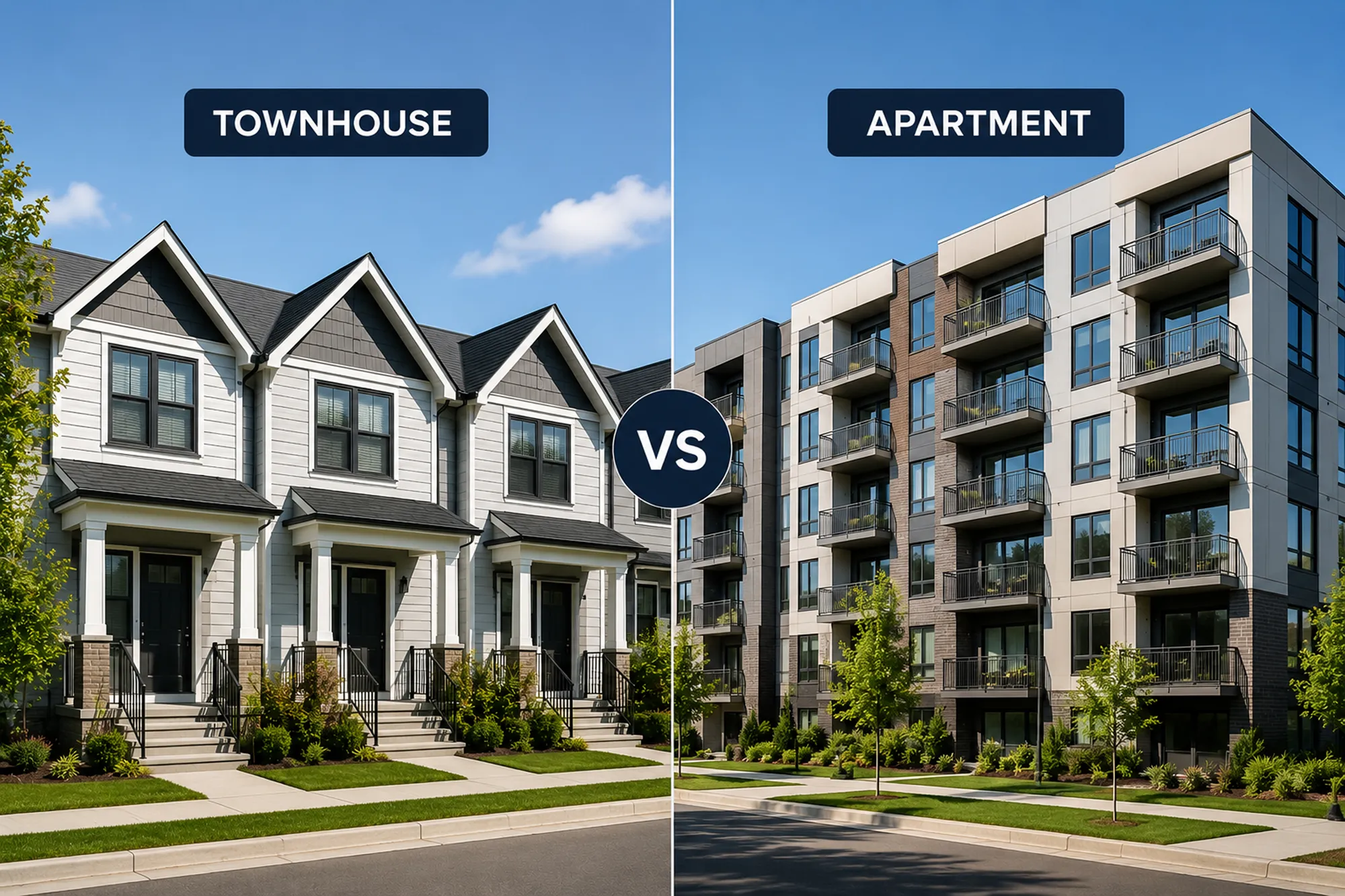
A townhouse is an attached home that shares one or two side walls with its neighbors and usually has its own exterior entrance. An apartment is a single housing unit inside a larger multifamily building or complex. The difference is about the physical structure, not who owns it or how it is rented.
What is a townhouse?
A townhouse is a multi-level home built in a row, attached to neighboring units by shared side walls. The U.S. Census Bureau classifies townhouses as attached single-family homes when each unit is separated by a ground-to-roof wall and has its own utility systems. Most townhouses have a private front door, and many include a garage, a patio, or a small yard.
What is an apartment?
An apartment is one unit within a building or property that contains multiple units. Freddie Mac describes apartment properties as buildings with several units that often share entrances, hallways, and building systems. Apartments are usually single-level, and neighbors may live beside, above, or below your unit.
Can you rent both townhouses and apartments?
Yes, both townhouses and apartments are available as rentals across the United States. A townhouse can be rented from an individual owner or a property management company, and an apartment can also be owner-occupied in some buildings.
The housing label alone never tells you who owns the property, who handles maintenance, or what the lease requires.
Townhouse vs apartment comparison table
The table below compares the features renters most often notice when choosing between an apartment vs townhouse:
| Factor | Townhouse | Apartment |
|---|---|---|
| Layout | Often multi-level, with rooms separated by floor | Often single-level, although multi-level units exist |
| Space | Typically offers more room or more separated living areas | Often more compact, but size varies widely |
| Privacy | Usually no neighbor directly above or below | May have neighbors beside, above, or below |
| Noise | Often less overhead footstep noise | Noise can come from halls, adjoining units, or upper floors |
| Outdoor space | More likely to include a patio or small yard | Often shared outdoor areas, balconies, or limited private space |
| Parking | May include a driveway, garage, or assigned spaces | Often uses lots, garages, decks, or assigned spaces |
| Maintenance | May include more lease-specific exterior responsibilities | Management typically handles common building areas |
| Amenities | May have fewer shared facilities | Often more likely to offer shared gyms, pools, or lounges |
| Stairs | Multi-level units commonly require daily stair use | Single-level units may reduce stairs inside the home |
| Location | Often found in suburban or lower-density areas | Common in both urban and suburban locations |
| Cost | Often higher because of size and private features | Often lower, but total monthly costs can change the comparison |
What are the pros and cons of renting a townhouse vs apartment?
Townhouses usually trade easier access to private space for higher costs or more upkeep, while apartments often trade space for convenience. The better choice depends on the actual lease, location, and features you will use regularly.
Townhouse pros and cons
A townhouse rental usually offers house-like living without the price of renting a detached home.
Pros
- More square footage and separate levels for living and sleeping
- No neighbors above or below the unit in most layouts
- Private entrance instead of shared hallways
- Garage, driveway, patio, or yard is common
- More storage space in many floor plans
Cons
- Rent and utilities often run higher than a comparable apartment
- Stairs are part of daily life in most units
- The lease may assign lawn care or other exterior tasks to you
- Shared amenities like pools and gyms are less common
- Communities are often farther from downtown areas
Apartment pros and cons
An apartment rental usually offers a lower cost of entry and less responsibility for upkeep.
Pros
- Lower advertised rent in most markets
- Smaller spaces usually cost less to heat and cool
- On-site management handles most maintenance
- Shared amenities such as gyms, pools, and package rooms
- More locations near jobs, transit, and restaurants
Cons
- Less square footage and less storage
- Neighbors may live above, below, and beside you
- Noise travels through shared floors and hallways
- Outdoor space is often limited to a balcony or none at all
- Parking may be unassigned or cost extra
What are the main differences renting a townhouse vs apartment
The biggest differences involve how you use the space each day, how many neighbors surround you, and which services come with the property. Comparing the actual floor plan and lease is more useful than relying on broad assumptions about either housing type.
Here are the main differences between townhouses vs apartments for renters:
1. Space and floor plan
A townhouse usually offers more total square footage than an apartment, spread across two or more levels. The same square footage also feels different when it is stacked vertically instead of laid out on one floor. Separate levels create distance between bedrooms and living areas, which many renters value.
2. Privacy and shared walls
A townhouse typically shares only one or two side walls, while an apartment can share walls, ceilings, and floors. Fewer shared surfaces mean fewer points where you hear neighbors and they hear you. An end-unit townhouse shares just one wall, which is the most private attached option.
3. Noise from neighbors
Noise depends on construction quality and unit position, not just the housing label. Townhouses avoid overhead footsteps because no one lives above you, but sound can still pass through side walls. Apartments carry more noise through floors, ceilings, and shared hallways, especially in older buildings.
4. Private entrances and common areas
Most townhouses have a private exterior entrance, so you walk from your car to your front door. Most apartments are reached through shared entries, hallways, elevators, or stairwells.
A private entrance means fewer neighbor encounters and simpler deliveries, while common areas put you closer to building services.
5. Outdoor space
Townhouses commonly include a patio, a small yard, or both, and some communities fence them. Apartments usually offer a balcony at most, with shared courtyards replacing private outdoor space.
If you want to grill, garden, or let a dog out the back door, the townhouse format usually fits better.
6. Parking and garage options
Many townhouses include an attached garage or private driveway steps from the front door. Apartments more often rely on open lots, assigned spaces, or paid garages shared by the whole building.
Ask about guest parking and EV charging at both, because neither is guaranteed by the property type.
7. Storage space
Townhouses usually provide more storage through closets on multiple levels, garages, and sometimes attics or under-stair space. Apartments have less built-in storage, though some buildings rent storage units on site for a monthly fee. Renters with bikes, tools, or seasonal gear often feel this difference quickly.
8. Amenities and shared facilities
Apartment communities are more likely to offer pools, fitness centers, package lockers, and resident lounges. Townhouse communities often trade those shared facilities for more private space inside each home. The practical question is whether you would use the amenities enough to give up the extra room.
9. Stairs and accessibility
Most townhouses require stairs every day, and most apartments do not once you reach your floor. Stairs separate sleeping and living areas nicely, but they complicate life with mobility limitations, strollers, heavy groceries, or large furniture. Renters who need or prefer single-level living should weigh this factor heavily.
10. Location and commute
Apartments cluster near city centers, employment hubs, and transit lines, while townhouse communities are often built farther out where land costs less.
A larger home is not automatically the better value if it adds thirty minutes and extra fuel to every workday. Compare the home and the location together.
Is a townhouse or apartment cheaper to rent?
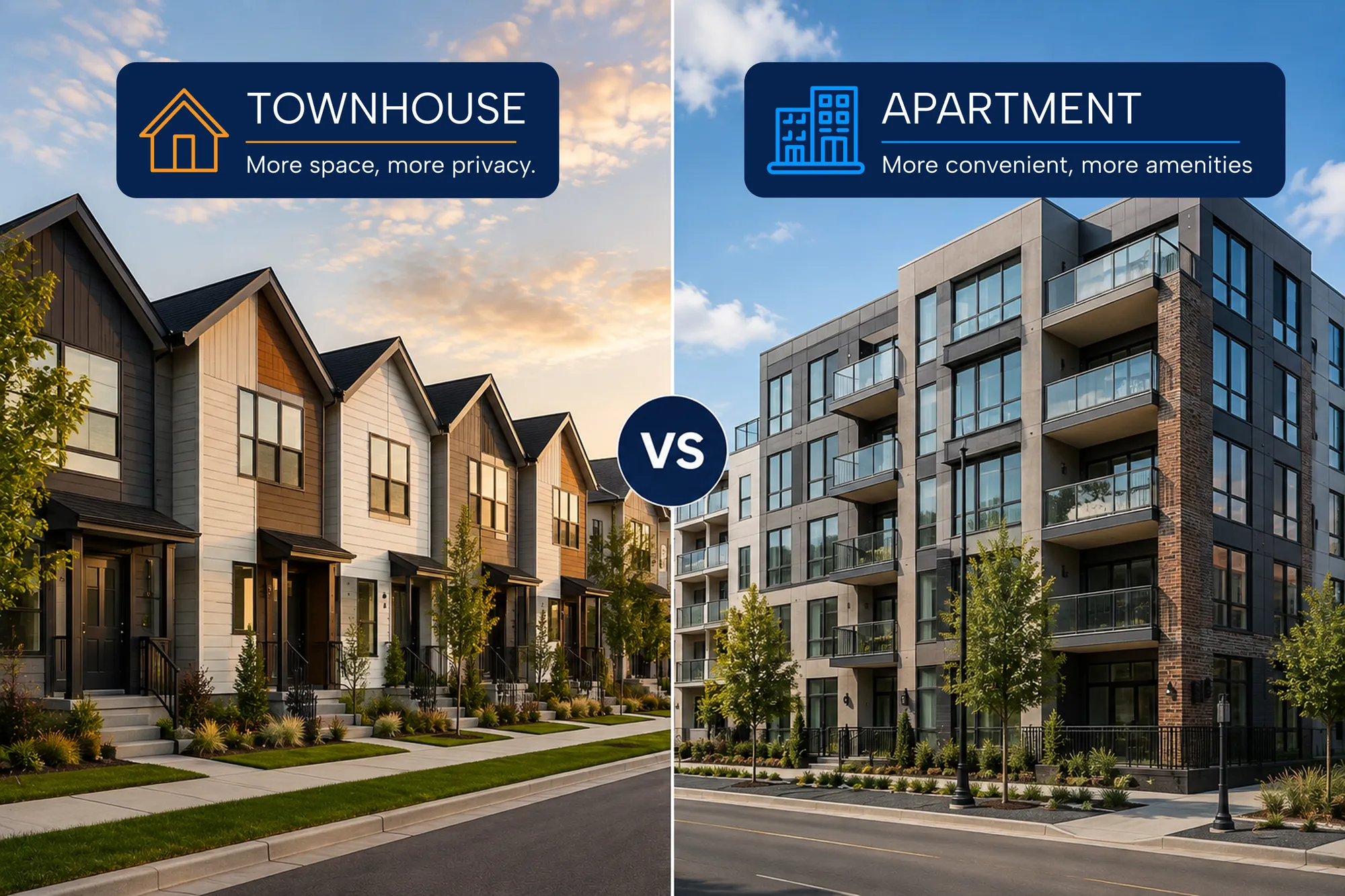
Apartments usually have lower advertised rent than townhouses in the same market, mainly because they are smaller. The cheaper option for you, however, is decided by total monthly housing cost, which includes utilities, fees, deposits, and any upkeep the lease assigns to you.
Here’s what you should consider when calculating the cost of renting a townhouse vs an apartment:
1. Monthly rent
Apartment rent is often lower because many units have less private square footage and fewer home-like features than townhouses. However, a larger apartment in a premium location can easily cost more than a townhouse farther from the city center.
Compare homes with similar bedroom counts, locations, and condition whenever possible. A headline rent difference means less when one property includes features that the other charges for separately.
2. Utilities and energy costs
Utilities are usually higher in a townhouse because there is more space to heat and cool, often across multiple floors. Apartments benefit from smaller footprints and insulation from surrounding units. Ask each property exactly which utilities you pay directly, because water, trash, and internet billing vary by lease.
3. Security deposits and move-in costs
Security deposits and other move-in charges depend on the property, lease, local law, and applicant circumstances rather than the housing type alone. Do not assume a townhouse requires a larger deposit simply because the monthly rent is higher.
Ask for every amount due before move-in in writing, including deposits, administrative charges, and the first rent payment. This lets you compare the cash needed to start each lease, not only the recurring monthly amount.
4. Parking, pet, storage, and amenity fees
Extra charges can change which rental is cheaper after the base rent comparison initially points another direction. One apartment may charge separately for parking and storage, while another property includes those features in the monthly rent.
Pet deposits, monthly pet rent, amenity charges, and reserved parking should also be added before you compare totals. Use the same cost categories for both listings so small recurring fees do not disappear from your decision.
5. Maintenance and yard-care costs
Maintenance expenses for renters depend on what the lease assigns to the resident and what management provides. A townhouse may include lawn or landscaping service, or the lease may place certain outdoor tasks on the renter.
Apartments usually place common-area maintenance with management, but residents still have responsibilities inside their units. Ask whether you must provide filters, pest treatments, lawn care, or other routine items before estimating the true monthly cost.
Who handles maintenance in a townhouse vs apartment?
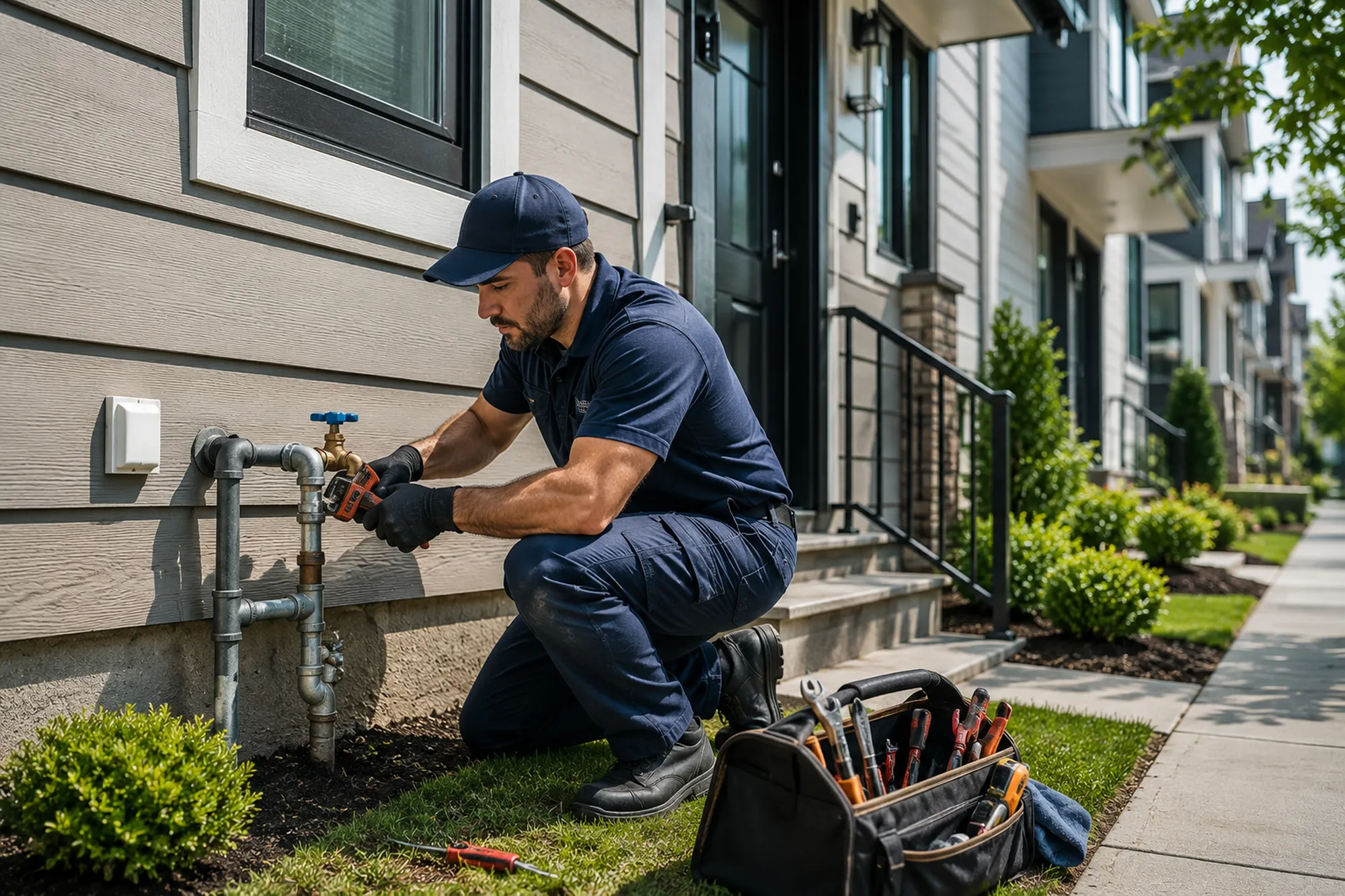
The lease and the property manager decide who handles maintenance, not the housing type. Apartment management usually covers more by default, while townhouse responsibilities vary from one community to the next.
1. Interior repairs and maintenance
Interior repairs like plumbing, appliances, and HVAC are the landlord's or property manager's responsibility in most professionally managed rentals. Renters typically handle basics such as light bulbs and, in some leases, HVAC filters.
The exact process can differ between communities, so ask how maintenance requests are submitted and what response process residents should expect. A clear reporting system matters more than whether the home is called an apartment or townhouse.
2. Lawn, landscaping, and exterior upkeep
Townhouse lawn and exterior responsibilities vary more than many renters expect, especially when homes include private yards or entrances. Management may provide full landscaping service, while another lease may assign mowing, watering, snow removal, or basic yard care to residents.
Apartment landscaping is usually handled as a shared property service because residents do not control individual grounds. Private patios or balconies can still have cleaning and use rules that tenants must follow.
3. Community and shared-area maintenance
Shared-area maintenance is generally handled by property management or a community association rather than individual renters. That work can include roads, common landscaping, pools, hallways, lighting, trash areas, or shared recreational spaces.
Renters almost never handle shared-area upkeep directly. The costs, however, can be built into rent or billed as fees, which is worth confirming.
Why the lease matters more than the property type
Your lease is the best source for determining your maintenance responsibilities because rental duties vary between properties. Two similar townhouses can assign yard care differently, just as two apartment communities can handle utilities or minor upkeep differently.
Read the maintenance section before signing and ask for clarification when any responsibility is unclear. Verbal assumptions are much harder to rely on later than written lease terms.
How do HOA and community rules affect townhouse and apartment renters?
HOA or community rules can affect renters even when the renter does not directly pay an association fee. Restrictions may be enforced through the owner, property manager, lease, community policies, or a combination of those arrangements.
HOA rules in townhouse communities
Townhouse renters may live in communities governed by a homeowner’s association that sets rules for shared property and neighborhood standards. Those rules can cover parking, exterior decorations, trash containers, pets, quiet hours, or use of common areas.
The landlord may remain responsible for association dues, while related costs might also be reflected in rent or separately addressed in the lease. Never assume how HOA charges work without checking the rental agreement.
But if you’re looking for townhouse rentals with no HOA, you can check out our available listings at Legacy Signature Rentals. We built and manage our communities, so you no longer have to deal with HOAs.

Apartment community rules
Apartment communities commonly use property-wide rules even when no HOA is involved. Policies may govern parking permits, guests, pool access, package pickup, grills, balconies, noise, or shared amenity hours.
These rules can affect daily life as much as the physical unit itself. Ask for current community policies before signing, especially when a particular amenity or parking arrangement influenced your choice.
Which fees and responsibilities should you verify before signing?
Verify any community-related fee or responsibility that could affect your monthly budget or daily use of the property. Ask who pays association-related charges, which rules apply to renters, and whether violations can create fees under the lease.
Overall, you should verify these items in writing before signing either lease:
- Whether any HOA or community fee is billed to you directly
- Which rules carry fines, and who pays them
- Parking, guest, and trash rules that affect daily routines
- Any approval process for pets, satellite dishes, or exterior items
- Quiet hours and amenity rules you are agreeing to follow
Townhouse vs apartment for pets
Neither townhouses nor apartments are automatically better for pets because pet suitability depends on the property and lease. Outdoor access helps some renters, but restrictions, fees, flooring, stairs, and nearby walking areas can matter just as much.
Here’s what you need to check when choosing between renting an apartment or a townhouse:
1. Private yards and outdoor access
A townhouse with a fenced private yard can make quick outdoor trips easier, especially when your routine depends on frequent access. However, not every townhouse has a yard, and an unfenced lawn may offer little practical difference from shared apartment grounds.
Apartments can work well for pets when the property has convenient walking routes, dog areas, or direct ground-floor access. Evaluate the actual route from your door to an appropriate outdoor area rather than judging only by housing type.
2. Pet restrictions, deposits, and monthly pet rent
Pet rules can include breed restrictions, weight limits, pet deposits, monthly pet rent, or limits on the number of animals. Those policies are property-specific and can apply to either townhouses or apartments.
Ask for the complete pet policy before paying an application fee when a pet is part of your household. A property that looks ideal can become unsuitable if the lease restrictions do not match your situation.
3. What pet owners should check before choosing either rental
Pet owners should compare outdoor access, flooring, stairs, nearby walking space, fees, restrictions, and rules for shared areas. If a yard is included, confirm whether it is fenced and who handles cleanup or landscaping.
Overall, you should check these things if you’re planning to rent a home with pets:
- The written pet policy, including breed, size, and number limits
- Pet deposit amount and whether it is refundable
- Monthly pet rent and any one-time pet fees
- Yard fencing, leash rules, and waste-station locations
- Flooring type, since carpet can add wear charges at move-out
Should you rent a townhouse or an apartment?
Rent a townhouse when private space and a home-like layout matter most, and choose an apartment when convenience or lower total cost matters more. This choice can change quickly when one specific listing has a better location, lease, or included services.
Choose a townhouse if...
- You want fewer neighbors directly above or below your home.
- You prefer bedrooms and living areas separated across different floors.
- A driveway, garage, patio, or yard would improve your daily routine.
- You need more storage or space for a home office.
- You’re comfortable using stairs and potentially managing more space.
- You can afford the complete monthly cost without stretching your budget.
Choose an apartment if...
- You want a smaller home that is easier to furnish and maintain.
- You prefer single-level living or easier access to an elevator.
- Shared amenities would replace services you already pay for elsewhere.
- You want more options near work, transit, shopping, or entertainment.
- You do not need a private garage, yard, or large storage area.
- The total monthly cost is clearly lower after all fees are included.
Which is better if you work from home?
A townhouse is often better for remote work when its layout gives you a separate room or floor away from household activity. An apartment can work equally well with a den or quiet workspace, so compare internet options, noise, and actual desk space.
Which is better if you have roommates?
A townhouse usually works better for roommates because separate levels reduce friction over noise and shared space. Splitting the higher rent often makes the per-person cost competitive with an apartment.
An apartment wins when the group wants a shorter commute or would rather not manage yard duties together.
Which is better if you want a pet-friendly rental?
The better pet rental is whichever property has the friendlier written pet policy, not whichever housing type it is. A townhouse with a fenced yard is ideal when the lease allows your pet outside. An apartment near trails or with a dog park can serve an active dog just as well.
Which is better if location and commute matter most?
An apartment is usually better when location drives the decision, because apartment supply is concentrated near jobs, transit, and city amenities. A townhouse wins this scenario only when a community sits close to your work or along your route. Price the commute in time and fuel, not just miles.
Which is better if you prefer single-level living?
An apartment is usually the better fit for single-level living, since most townhouses are built on two or three floors. Some markets offer ranch-style or main-level-living townhomes, which changes the answer. If stairs are a hard limit, confirm the floor plan before touring rather than assuming from the label.
What should you check before renting a townhouse or apartment?
Before renting a townhouse or apartment, verify the costs and responsibilities that cannot be judged from photos or a listing description. The best tour and lease review should confirm exactly what you will pay, use, maintain, and follow.
1. Compare the total monthly cost, not just the advertised rent
Add rent, utilities, parking, pet charges, insurance, and any community fees to get each listing's true monthly number. Two listings that look $200 apart can land within $50 of each other after fees. Ask the leasing agent for every recurring charge in writing.
2. Ask exactly which utilities you will pay
Request a list of the utilities billed to you, including water, sewer, trash, gas, and electric. Then ask for the average monthly utility cost of the specific unit or floor plan. Many property managers can share this, and it can help you plan your budget ahead.
3. Confirm who handles lawn care and exterior maintenance
Ask who mows, waters, trims, and handles snow removal, and find the answer in the lease itself. If the duty is yours, ask whether equipment is provided. Get any exceptions or promises written into the lease before you sign.
4. Check parking, guest parking, and garage access
Confirm how many spaces come with the unit, where they are, and what they cost. Ask where guests park, because guest rules cause frequent disputes in both community types. If you drive an EV, verify charging access before you commit.
5. Test noise levels during the property tour
Tour during evening hours when neighbors are home, and stand quietly in bedrooms and shared-wall rooms. Listen for footsteps, plumbing, and street noise, and ask which walls are shared. An end unit or a top-floor apartment can solve a noise concern on the spot.
6. Check storage, laundry, and package delivery
Open the closets, look at garage or attic space, and ask whether extra storage costs money. Confirm whether laundry is in-unit, hookup-only, or shared. Ask how packages are handled, because a locker room, a front porch, and a leasing office create very different daily routines.
7. Review pet policies and outdoor-space rules
Read the pet addendum for breed limits, fees, and where pets are allowed on the property. Walk the yard or balcony and confirm what you can actually use, fence, or place there. Rules about grills, plants, and furniture vary more than most renters expect.
8. Read the lease and community rules before signing
Read the full lease, every addendum, and the community rules before signing anything. Confirm that the unit on the lease is the unit you toured, since model units can differ from available ones. Ask questions now, because the lease controls every aspect of the property once you sign.
How to compare two townhouse and apartment listings side by side
Fill in this worksheet with real numbers and lease answers from each listing, then compare the totals and tradeoffs in one view. This can help you find the better rental, whether it’s an apartment or a townhouse:
| Factor | Listing A | Listing B |
|---|---|---|
| Total monthly housing cost (rent + utilities + fees) | ||
| Square footage and usable layout | ||
| Number of shared walls | ||
| Noise observed during tour | ||
| Parking spaces, cost, and guest parking | ||
| Storage (closets, garage, extra units) | ||
| Outdoor space and who maintains it | ||
| Maintenance duties assigned to renter | ||
| Utilities you pay directly | ||
| Amenities you would actually use | ||
| Pet rules, fees, and restrictions | ||
| Commute time and transportation cost | ||
| Stairs and accessibility fit | ||
| Lease terms and community restrictions |
Looking for townhouses to rent? Find your next home at Legacy Signature Rentals.
Legacy Signature Rentals develops and manages modern townhomes and single-family rentals across North Carolina and Texas. Every home is professionally managed and includes the Legacy Resident Benefits Package, which gives you more than just a place to live.
You can browse our available homes to compare current townhome floor plans, pricing, and availability. All our rentals are managed through App Folio, where you’ll get your own tenant portal, making it easy to pay rent, request maintenance, and more.
Every Legacy Home have granite countertops, stainless steel appliances, and carpet-free finishes. You rent new construction, not a retrofitted older property.
Frequently asked questions about townhouses vs apartments
Is a townhouse considered an apartment?
No, a townhouse is not considered an apartment. A townhouse is an attached home with its own exterior entrance, usually built on multiple levels with shared side walls. An apartment is a unit inside a multifamily building. Both can be rented, but housing data and most property listings classify them as different structure types.
What is the difference between a townhouse and a condo?
A townhouse describes a building style, while a condo describes an ownership arrangement. A townhouse is an attached, multi-level home with its own entrance. A condo is an individually owned unit within a shared property, and a condo can physically be an apartment-style unit or a townhouse. Renters can lease either one from its owner.
Do townhouse renters have to pay HOA fees?
Usually no, townhouse renters do not pay HOA fees directly, because the owner is responsible for association dues. Some leases pass part of those costs to the renter through rent or a separate fee. HOA rules still apply to renters living in the community, so confirm both the rules and any charges before signing.
Can you hear neighbors in a townhouse?
Yes, you can sometimes hear neighbors in a townhouse, though usually less than in an apartment. Townhouses avoid overhead footstep noise because no unit sits above yours, but sound can travel through shared side walls. Construction quality, wall insulation, and unit position matter most, so test noise levels in person during your tour.
Are utilities usually higher in a townhouse than an apartment?
Yes, utilities usually run higher in a townhouse than in an apartment. Townhouses have more square footage to heat and cool, often across two or three levels, and more exterior surface exposed to outdoor temperatures. Apartments are smaller and insulated by neighboring units. Ask each property for average utility costs on the specific unit.
Can an apartment have a private entrance and yard?
Yes, some apartments have private entrances, and a smaller number include patios or small yards. Garden-style and ground-floor units are the most common examples. These features depend on the individual building rather than the apartment label, so search listings for exterior entry and private outdoor space if those features matter to you.
Can a townhouse have apartment-style amenities?
Yes, some townhouse communities offer apartment-style amenities such as pools, fitness centers, playgrounds, and clubhouses. Larger, professionally managed communities are the most likely to include them.
Many townhouse neighborhoods trade shared facilities for more private space, so confirm which amenities exist, whether renters can use them, and whether access carries a fee.
Are townhouse walls thicker than apartment walls?
Townhouse walls are not automatically thicker than apartment walls because construction methods, materials, building age, and local codes vary. Some townhouses may provide excellent sound separation, while others still transmit conversations or impact noise through shared walls. Ask about construction when possible and use the tour to judge sound transmission in the actual unit.