An apartment application usually takes 1 to 3 business days to process, though some decisions take 2 to 5 days or longer. Filling out the application itself may take less than an hour if you already have your documents and rental details ready.
Most of the waiting happens after you submit the form. Automated checks can move fast, while missing documents, slow references, co-applicants, or a manual review can add time. The property's own screening process also matters, so your application may take more or less time than the national average.
This guide explains how long each part can take and what happens while your application is under review. You will also learn what can cause delays, when to follow up, how approval is confirmed, and what rights you have after a denial.
How long does an application for an apartment take?
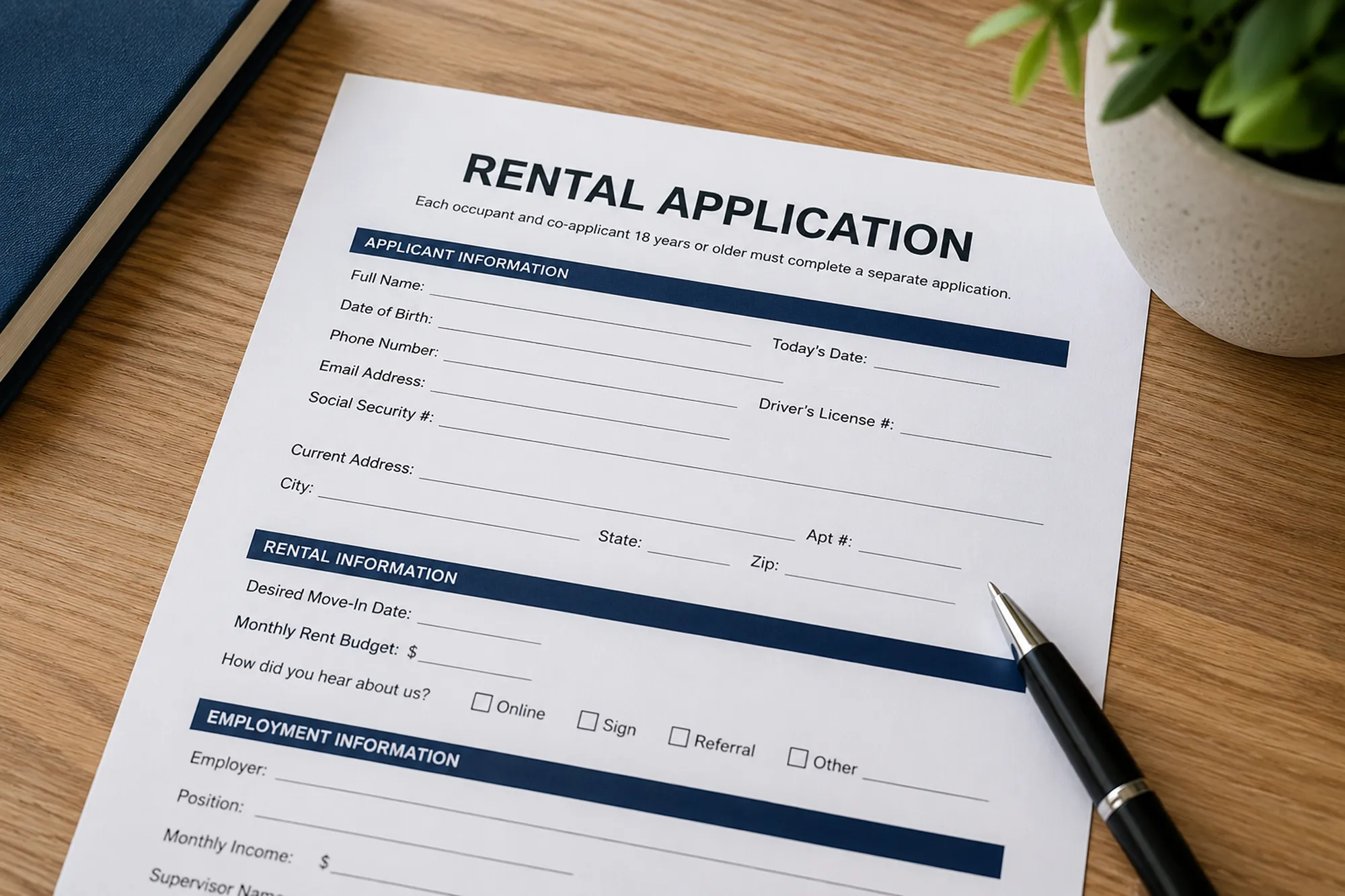
Most apartment applicants hear back within 1 to 3 business days, though a more complex review can take 2 to 5 days or longer. Current renter guides from Zillow, Apartments.com, and Rentler give similar ranges for normal processing.
That estimate covers the wait for a decision, not just the time you spend filling out the form. If your documents are ready, an online rental application may take less than an hour to complete.
The full process has several separate timelines: filling out the form, screening, the final decision, and lease signing. Some of these steps happen at the same time, so you should not add every stage together.
Apartment application timeline at a glance
| Stage | Normal | Delayed | Unusually long |
|---|---|---|---|
| Filling out and submitting the application | 30 to 60 minutes | 1 to 2 days if documents are missing | 3+ days if information is incomplete or required documents are difficult to find |
| Initial application review | Same day to 1 business day | 2 business days | 3+ business days during periods of heavy application volume |
| Credit and background screening | Minutes to 48 hours | 2 to 3 business days | 5+ business days if records need manual review |
| Employment and income verification | 1 to 2 business days | 3 to 5 business days | 1+ week when employers, contacts, or required documents are unavailable |
| Rental history and landlord references | 1 to 2 business days | 3 to 5 business days | 1+ week if landlords or other references do not respond |
| Final approval decision | 1 to 3 business days total | 2 to 5 business days total | 7 to 10+ business days in complex cases that require additional review |
| Lease signing after approval | 1 to 3 business days | 3 to 5 business days | 1+ week when lease terms, move-in timing, payments, or required documents remain unresolved |
What happens after you submit an apartment application?
After you submit an apartment application, the property reviews it for completeness, runs screening reports, verifies your income, and checks your rental history before making a decision. Understanding each step makes the wait far less stressful, because you know exactly what is happening to your application right now.
One important point before the walkthrough: these steps overlap. Screening reports can run while a leasing agent contacts your employer, so the stages below often happen side by side instead of adding up into one long wait.
Step 1. The property checks whether your application is complete
A completeness check is the first thing that happens to a submitted rental application. A leasing agent or property manager confirms that every field is filled in, the application fee is paid, and required documents like pay stubs and identification are attached.
Incomplete applications usually get set aside until the applicant responds, which is why this simple first step causes so many delays.
Step 2. Credit, background, and rental screening begins
Screening reports are typically the fastest part of the entire process. Most properties order a combined credit and background check through a third-party screening service.
But when it comes to an apartment background check, how long does it take? Automated background check reports from third-party services, such as TransUnion SmartMove or Zillow Rental Manager can return within minutes to a few hours.
Criminal history and eviction records are usually part of the same report, so this stage rarely creates the wait renters imagine. The Consumer Financial Protection Bureau explains that tenant screening reports can pull information from several sources used in rental decisions.
Step 3. Income and employment information is verified
Income verification confirms that you earn enough to afford the rent, usually two to three times the monthly amount. Some properties verify income instantly through payroll or bank-linked software, while others email or call your employer directly.
Human verification is where timelines start to stretch, because the property is now waiting on someone else's reply.
Step 4. Rental history and landlord references may be checked
A rental history check tells the property how you behaved as a tenant, including payment record and any lease violations. Leasing teams may call your current and previous landlords, and those calls only move as fast as the landlords answer them.
A property manager who returns the call within an hour keeps your file moving, while one who ignores voicemails can add days.
Step 5. The landlord or property manager makes the final decision
The final decision happens once screening results and verifications are back in one file. The landlord or property manager compares your complete application against the property's written screening criteria. They can either approve, deny, or approve with conditions such as a co-signer or larger deposit.
When several qualified applications arrive for one unit, most properties process them in the order received.
Remember that several of these steps happen simultaneously rather than one after another. Your background check may finish on day one while employment verification wraps up on day two, and both go into the same final decision.
What can make an apartment application take longer?

An apartment application usually takes longer when information is missing, needs to be checked by a person, or depends on someone outside the leasing office. Employers, former landlords, and extra document requests often cause more delay than the automated screening itself.
Here are mistakes you should avoid if you want to speed up the approval of your apartment rental application:
1. Missing, incomplete, or inconsistent information
Missing or conflicting details can pause your application until the leasing team knows which information is correct. A wrong address, missing date, incomplete job history, or unreadable file may lead to another message before the review can continue.
Use the same legal name and current contact details throughout your application whenever the form asks for them. If you spot an error after submitting, contact the property instead of waiting for someone else to notice it.
2. Delays verifying employment, income, or rental history
Employer and landlord checks can take time because the property has to wait for another person or company to reply. Your automated reports may already be finished while the leasing team is still waiting for one final confirmation.
Give accurate phone numbers and email addresses whenever the application asks for them. If your employer uses a central verification service, or your former rental changed management, provide the current contact information.
3. Roommates, co-applicants, co-signers, or guarantors
Your application may take longer when several people have to complete their own forms or screening. One unfinished file can hold up the whole household even if everyone else submitted their information on time.
Ask which adults need to apply before anyone starts the process. If you may need a co-signer or guarantor, having that person ready can prevent another round of waiting later.
4. Self-employment, a new job, or a recent relocation
Non-traditional income takes longer to verify because there is no employer to call. Self-employed applicants usually need to provide tax returns, 1099s, or several months of bank statements, and leasing teams review those documents by hand.
A brand-new job or an out-of-state rental history creates the same problem, since the usual verification contacts are harder to reach or do not exist yet.
5. Credit freezes or information that needs manual review
A credit freeze can block a screening company from reaching credit information that the property needs. If a credit report is required, your application may stay incomplete until you temporarily lift the freeze with the correct bureau.
Manual review may also be needed when records look duplicated, outdated, unclear, or hard to match to you. The FTC notes that tenant screening reports can contain errors, so accurate personal information matters.
6. High application volume, weekends, holidays, and third-party screening delays
Timing you cannot control also affects rental application processing. Applications submitted on a Friday afternoon often wait until Monday, since many leasing offices and employers pause verification over the weekend.
During peak rental season, some apartment units may draw several applications at once, and the screening company itself can slow down during high-volume periods.
How can you speed up your apartment application?
You can help speed up an apartment application by sending a complete file, preparing the right documents early, and replying quickly when the leasing team contacts you. You cannot control every screening step, but you can reduce delays caused by missing or unclear information.
Here’s what you can do to avoid delays on your apartment application:
1. Prepare your identification and income documents before applying
Gather your documents before you open the application. Most properties ask for a government-issued photo ID, your two most recent pay stubs, and sometimes recent bank statements.
Self-employed applicants should have their most recent tax return and several months of bank statements ready, since those replace pay stubs as proof of income.
2. Provide complete and accurate information
Fill in every field, and make sure the details match your documents exactly. A birthdate typo or an old address can trigger manual review of your screening report, and one skipped question can park your file in the incomplete pile. Five extra minutes of proofreading can save two days of waiting.
3. Have your rental history and reference contact details ready
Collect current phone numbers and email addresses for your landlords from the past two to three years. Leasing teams lose real time hunting down reference contacts that ring to disconnected numbers. Accurate contact details let verification calls go out the same day your application arrives.
4. Let employers, previous landlords, and co-signers know they may be contacted
A quick heads-up to your references removes the most common bottleneck in the entire process. Tell your employer's HR department and your former landlords that a verification request is coming, and ask them to respond promptly.
Co-signers should complete their portion of the application the same day you complete yours.
5. Remove a credit freeze before screening when necessary
Lift any credit freeze before you submit the application. You can temporarily unfreeze your credit online with each bureau in a few minutes, and doing it in advance means the screening report runs on the first attempt. Applicants who forget this step often lose two or three days before anyone notices the report failed.
6. Respond quickly when the leasing team requests additional information
Fast responses keep your application at the top of the pile. If a leasing agent asks for another document or a clarification, treat it as urgent and reply the same day. Applications generally sit paused while the property waits on you, so response speed is the one part of the process entirely in your control.
7. Ask about the property's expected processing timeline when you submit
One question at submission saves days of anxiety later: "How long does your application review usually take?" Every property runs a different processing window, and knowing theirs tells you exactly when it makes sense to follow up. Write the answer down, because that date is your cue to check in.
When should you follow up on an apartment application?
You should follow up after the property's stated review window has passed. If no timeline was given, a polite status check after several business days is reasonable for many standard applications.
Here’s what you can do when following up for your apartment rental application:
Follow up when the property's expected review window has passed
The best time to follow up is after the processing window the property gave you. If the leasing team said 3 business days, contact them after that period instead of sending repeated messages while the file is still being reviewed.
If you applied before a weekend or holiday, count business days unless the property told you it processes applications every day. For example, an application submitted Friday may not receive a full business day of review until Monday.
Know what to ask when you check your application status
Ask whether your application is still under review and whether the leasing team needs anything else from you. Include your name, the property or unit, and the date you applied so the team can find your file quickly.
Keep the message focused on status instead of asking the leasing agent to predict the result. The reviewer may know what is still missing without being ready to tell you whether you are approved.
Here’s a copy-ready follow-up message you can use:
Subject: Application status check, [Your Name], [Unit or Property Name]
Hi [Leasing Contact],
I applied for [unit] on [date] and wanted to check in, since your estimated review window has passed. Is my application complete on your end, and are any verifications still pending? I'm happy to provide anything else you need and can be reached anytime at [phone].
Thank you, [Your Name]
What does a pending rental application mean?
A pending rental application means you have not received a final decision yet. Screening may still be underway, the team may be waiting for a reply, or your completed file may still need final review.
Pending does not mean approved, and it does not mean denied. Your application remains undecided until the landlord or property manager gives you a final answer.
What if your apartment application has taken more than a week?
If your application has taken more than a week, ask for a clear status update and whether anything is still missing. A week is longer than the common 1-to-3-business-day range, but some delayed cases do take longer.
You can also ask when the property expects to make a decision. There is no single federal rule that gives every landlord the same deadline, and state or local rules may add other requirements.
Should you keep looking at other apartments while you wait?
Yes, you can keep looking at other rentals while your application is pending unless you made a separate commitment that limits your options. Continuing your search can make sense when timing matters because a pending application does not guarantee the home.
Before paying another application fee, weigh the cost and how likely you are to use the second option. Just check each property's holding fee and cancellation terms before paying anything beyond an application fee, so backing out later costs you nothing.
How do you know if your apartment application was approved?
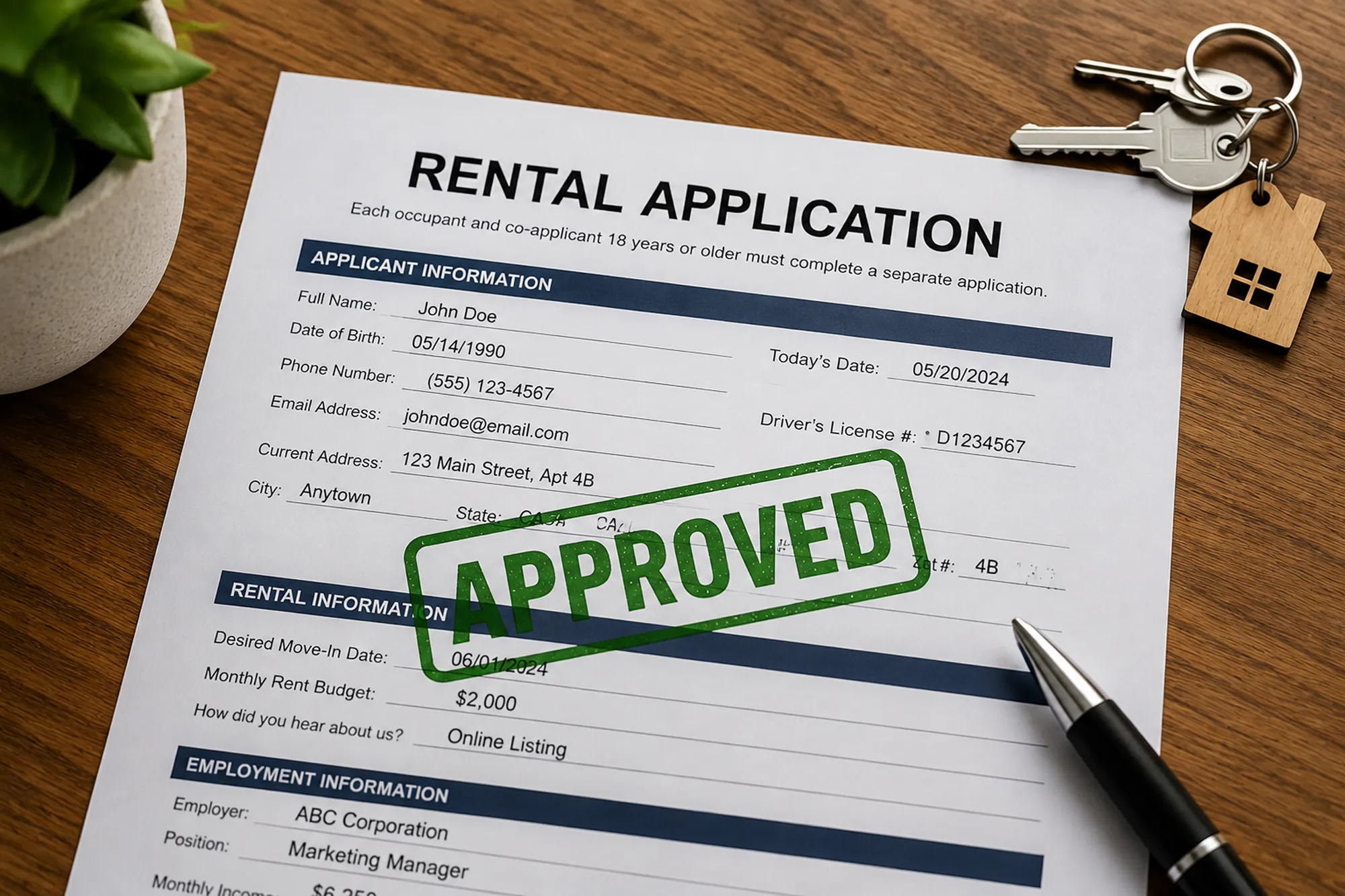
You know your apartment application was approved when the landlord or property manager clearly tells you and gives you the next leasing steps. A friendly conversation, a request for documents, or questions about move-in dates are not the same as approval.
Signs you got approved for an apartment
A written approval, a formal lease offer, or instructions to review and sign the lease confirm that the property has approved your application. The message should also explain what happens next, including any deadlines for documents, payments, or signatures.
Keep the approval message for your records and read every lease term before signing. Approval does not mean the lease is complete until the required agreement has been signed under the property's process.
Does no response mean your rental application was denied?
No response does not mean your rental application was denied. Silence only means you have not received a final answer, which is why a direct status check is better than guessing.
A slow reply can come from missing information, staff workload, outside screening, or a verification that has not finished. Wait for a clear approval or denial before you treat the result as final.
Why verbal interest or a positive conversation does not guarantee approval
A positive conversation with a leasing agent does not guarantee approval because your screening may still be open. Leasing staff can be helpful and encouraging while still following the same review process for every applicant.
Try not to give notice at your current home or book nonrefundable movers based only on a promising conversation. Confirm the approval and lease terms in writing before you make plans that are hard to undo.
What happens after your apartment application is approved?
After approval, you typically review and sign the lease within 1 to 3 business days, pay the required move-in costs, and receive your move-in date. The time from approval to move-in can be the same day or several weeks, depending mostly on lease timing and unit availability.
Here’s what happens once you receive an apartment rental approval:
1. Receiving the approval notice
The rental approval notice arrives by email, phone, or through the property's online portal, usually with instructions and a deadline. Many properties give approved applicants 24 to 72 hours to accept and pay initial fees before offering the unit to the next applicant.
Respond quickly, because approval reserves your place in line rather than the unit itself.
2. Reviewing the lease
The rental lease is a binding contract, so read it fully before signing. Check the rent amount, lease term, fees, renewal terms, and any addenda covering pets, parking, or utilities. Ask questions about anything unclear now, since terms are far easier to clarify before signatures than after.
3. Paying required deposits or move-in charges
Move-in costs are usually due at or before lease signing. Expect the security deposit, first month's rent, and any administrative or pet fees, and confirm which payment methods the property accepts. Some properties charge a holding fee at approval that later applies toward these amounts.
4. Signing the lease
Lease signing typically happens within 1 to 3 business days of approval, often electronically. Digital signing can be completed the same day the lease arrives, while in-person signings depend on office scheduling. The unit is officially yours once every leaseholder has signed and initial payments have cleared.
5. Confirming the move-in date and receiving move-in instructions
Your move-in date depends on unit availability more than on paperwork speed. A vacant, market-ready unit can be available within days of signing, while an occupied or in-turnover unit may push move-in several weeks out.
The property manager will confirm your date and send instructions covering key pickup, utility setup, and the move-in inspection.
What are your rights if your rental application is denied?
If your rental application is denied because of a screening report, federal law entitles you to a written explanation, a free copy of the report, and the right to dispute errors in it. These protections come from the Fair Credit Reporting Act, and they exist because screening reports contain mistakes more often than most renters expect.
A denial is worth investigating rather than simply absorbing. Wrong information on one report will follow you to the next application unless you correct it.
When you should receive an adverse-action notice
An adverse-action notice is required whenever a screening report contributes to a denial, a co-signer requirement, or a higher deposit. According to the Consumer Financial Protection Bureau, the notice can be written, electronic, or verbal, and it must identify the screening company and explain your rights.
If you’re denied and receive no notice, ask the property directly whether a screening report was used.
How to get a copy of the tenant screening report
You are entitled to a free copy of your tenant screening report if you request it within 60 days of the adverse action. Contact the screening company named in your notice, since the FTC confirms the company must provide the free copy even if the landlord declines to share theirs. Reviewing the actual report shows you exactly what the property saw.
What to do if information in your screening report is wrong
Dispute errors directly with the screening company, in writing, with any supporting documents attached. The company generally has 30 days to investigate, per the CFPB's guidance on rental background checks, and it must correct information that is inaccurate or outdated.
Common errors include records belonging to someone with a similar name, outdated eviction filings, and paid debts still shown as owed.
Fair Housing and state or local rental-screening rules
The Fair Housing Act makes it illegal to deny housing based on race, color, religion, sex, national origin, familial status, or disability. If you believe a denial was discriminatory, you can file a complaint with HUD.
State and local laws add further screening rules in many places, including limits on application fees and how criminal history can be considered, so requirements in your city may go beyond the federal baseline.
What to expect when applying with Legacy Signature Rentals
Every application to Legacy Signature Rentals goes through the same 8-step screening process, applied consistently to every applicant. We build and manage the homes we build across North Carolina and Texas, so the team reviewing your application is the same team you will work with as a resident.
Here’s what our process looks like, so you know what is happening at every stage:
Our 8-step rental application screening process
Our screening follows eight defined steps, covering application completeness, identity verification, credit and background screening, income verification, and rental history review.
You apply online through AppFolio, our application and resident portal, which lets you upload documents and track your application from your phone. Every applicant is evaluated against the same written criteria, in the order applications are received.
What you can prepare to help keep your application moving
Having the right information ready before you apply can reduce delays and cut down on follow-up requests. Exact requirements vary by property, but you may be asked to provide:
- Government-issued identification
- Recent pay stubs or other accepted proof of income
- Bank statements or other income records, if required
- Current and previous rental history
- Contact details for former landlords or property managers
- Employment information and employer contact details
- Information for any co-applicants
- Co-signer or guarantor details, if needed
- Any additional documents required for self-employment or nontraditional income
If you are unsure which documents are accepted, you can ask our leasing team before submitting your application.

Frequently asked questions about apartment application timelines
Can an apartment application be approved the same day?
Yes, same-day apartment approval is possible when a property uses automated screening and your application is complete. Instant income verification and fast-returning screening reports can produce a decision within hours. Most approvals still take 1 to 3 business days, because employment or rental history verification usually involves a human response.
How long does an apartment background check take?
An apartment background check usually takes anywhere from a few minutes to 48 hours. Automated reports covering credit, criminal history, and eviction records often return almost instantly. Manual review, a credit freeze, or mismatched personal information can extend the check to several business days, which is why accurate application details matter.
Do apartment applications get processed on weekends?
Most apartment applications sit unprocessed over the weekend, since leasing offices, employers, and screening companies operate on business days. An application submitted Friday afternoon often begins review on Monday. Larger communities with weekend leasing staff may start the automated screening portion sooner, but employment and reference verifications still wait for business hours.
Can a landlord process several rental applications at the same time?
Yes, landlords can legally collect and screen multiple applications for the same unit. Most properties review applications in the order received and approve the first qualified applicant. Asking where you stand in line is a reasonable question, and the answer helps you decide whether to keep applying elsewhere while you wait.
What will disqualify you from getting an apartment?
Common disqualifiers include income below the property's requirement, recent eviction records, unresolved debt to a previous landlord, and false information on the application. Screening criteria vary by property, and some issues can be offset with a co-signer or larger deposit. Ask for the written criteria before paying an application fee.
How long after apartment approval do you sign the lease?
Lease signing typically happens within 1 to 3 business days after apartment approval. Many properties send the lease electronically the same day and give approved applicants 24 to 72 hours to sign and pay initial fees. The unit may be offered to the next qualified applicant if that deadline passes without a response.
How soon can you move in after your apartment application is approved?
Move-in can happen within a few days of approval when the unit is vacant and market-ready. If the unit is occupied or being turned over, move-in may be one to several weeks out. Unit availability drives the date, so confirm it before scheduling movers or giving notice at your current home.