
A townhome offers a middle ground between apartment living and renting a detached house. It usually has its own entrance and multiple floors, with no upstairs or downstairs neighbors, though side walls may be shared and community rules may apply. For renters comparing options, condos, townhouses and single-family homes differ in layout, privacy and maintenance.
What Makes a Townhome Different?
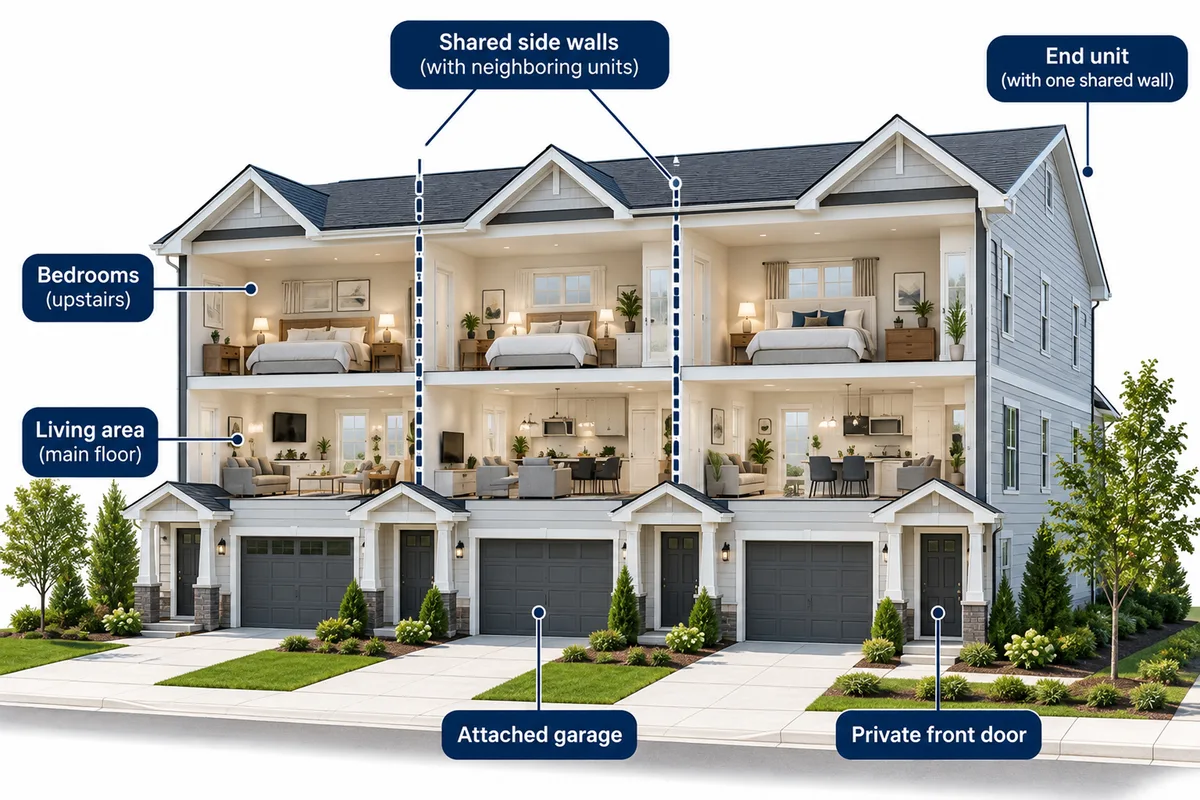
A townhome is an attached, usually multi-level home that shares one or two side walls with neighbors and has its own exterior entrance. Each unit runs from the ground to the roof, so no one lives above or below you. Townhomes are often built in rows or small groups within a planned community.
The U.S. Census Bureau counts homes like these as attached single-family homes when each unit has its own ground-to-roof walls and separate utilities. In daily life, that means a townhome feels more like a small house than an apartment. You get your own front door, often a garage or patio, and living space spread over more than one floor.
Is a townhome the same as a townhouse?
Yes, a townhome and a townhouse are the same thing. The two words are used interchangeably. “Townhome” tends to show up more in newer planned communities and rental listings, while “townhouse” is more common in older neighborhoods and city rows. The home itself does not change with the name.
What are the main features of a townhome?
The main features of a townhome are shared side walls, living space on two or three floors, a private entrance, some outdoor space and often community rules. Here is what each one means day to day.
Shared side walls, no one above or below
A townhome shares walls only on the sides. You will not hear footsteps overhead or worry about bothering a neighbor below, though some sound can carry through a shared wall.
Living spread across two or three floors
Most townhomes put the kitchen and living area on the main floor and bedrooms upstairs. That separation helps when someone works late or sleeps early. It also means stairs every day.
Your own front door
You walk straight from your door to the street or your driveway. There are no shared hallways, elevators or lobbies.
Garage, driveway or patio
Many townhomes include an attached garage, a driveway or a small patio or fenced yard. It is more outdoor space than most apartments offer, though less than a detached house.
Community rules and shared spaces
Townhomes are often part of a planned community with rules on parking, trash, pets and outdoor items. Some communities also have shared green space or a dog park.
What types of townhomes are there?
Townhomes come in a few common variations, and they can change your experience more than the label does.
End units vs interior units
An end unit shares only one wall and often has more windows and a slightly larger yard. An interior unit shares walls on both sides. This matters if you want more light or less shared-wall noise.
Two-story vs three-story layouts
Two-story townhomes usually have living space downstairs and bedrooms upstairs. Three-story layouts may add a ground-floor garage or bonus room. This matters if stairs are a concern or you need an extra room.
Stacked townhomes
Stacked townhomes place one unit on top of another, each with its own entrance. They can share a floor or ceiling, so they feel closer to a condo. This matters if you want no one above or below.
Townhomes with a garage
Some townhomes include a one- or two-car attached garage, and some have rear-load garages that open onto an alley. This matters if you have a car to protect or need storage.
At Legacy Signature Rentals, current listings include two bedroom townhomes with one and a half baths and three bedroom townhomes with two and a half baths, with some larger plans at the Hickory Springs community.
Who is a townhome a good fit for?
A townhome is a good fit for renters who want more space and privacy than an apartment without the cost and upkeep of a detached house.
Renters moving up from an apartment
If you are tired of shared hallways and neighbors overhead, a townhome is a natural next step. You get your own entrance and more room while staying in a managed community.
Households that need a third bedroom or an office
Many townhomes offer three bedrooms, which gives space for a child, a guest room or a home office on a separate floor.
Renters who want a private entrance and a garage
A townhome gives you a door that opens to your own space and often a garage for your car, bikes or storage.
Pet owners who want a patio or small yard
A fenced patio or small yard makes life with a dog easier than in most apartments. Check the pet policy and any breed or weight limits first.
People relocating who want a newer home without buying
If you are moving for work and want a newer home without committing to a purchase, a professionally managed townhome offers clear criteria, online applications and a set process.
Who might a townhome not suit?
A townhome might not suit you if stairs, shared walls or limited land are dealbreakers. Being honest about these saves you time.
- Anyone who cannot use stairs every day. Most townhomes put bedrooms upstairs.
- Renters who want a large private yard. Outdoor space is usually small.
- People who need total sound isolation. Shared walls can carry some noise.
- Renters who want resort-style amenities. Pools and gyms are more common in larger apartment communities.
If one of these rules out a townhome, the comparison of condos, townhouses and houses in the pillar guide above can point you to a better fit.
What is daily life in a townhome like?
Daily life in a townhome feels more like living in a small house than an apartment. You will notice three things most.
Noise and Shared Walls
You may hear neighbors through a shared wall at times, but there is no one walking above you. End units and well-built walls can reduce noise further.
Living with Stairs
Carrying groceries and laundry between floors becomes routine. Most people adjust quickly, but it is worth thinking about if you have mobility concerns.
Patios and Outdoor Space
A patio or small yard gives you room for a grill, plants or a dog, without the full yard work of a house. Outdoor space is also one of the practical differences to consider when choosing between a townhouse and an apartment.
Renting a townhome vs owning one
Renting a townhome means you usually do not pay association dues or handle major repairs, which owners do. Maintenance requests go to the landlord or management company, and association dues are typically the owner’s responsibility and built into the rent. Community rules still apply to you as a resident. The exact split of duties depends on the lease, so read it before you sign.
What should you check when touring a townhome?
When touring a townhome, check the parts that are specific to attached, multi-level living.
- Stairs and handrails. Walk them a few times and picture daily use.
- Sound through the shared wall. Visit in the evening when neighbors are home.
- Garage size. Measure it against your car, or bring a tape measure.
- Primary bedroom location. Check whether it is upstairs or on the main floor.
- Outdoor space rules. Ask what you can put on the patio or in the yard.
- Trash and parking. Ask where bins go and how guest parking works.
- Heating and cooling by floor. Upper floors can run warmer. Ask about separate zones.
- Lawn care. Ask whether the landlord or the tenant handles it.
Townhomes for rent with Legacy Signature Rentals
Legacy Signature Rentals builds and manages new two and three bedroom townhomes across North Carolina and Texas, including Hickory and Temple. Homes are carpet-free with granite countertops and stainless appliances, and rent and maintenance are handled online through the resident portal. Many homes are pet-friendly, with policies confirmed for each property.

Frequently asked questions about townhomes
Is a townhome a single-family home?
A townhome is often counted as an attached single-family home, because each unit runs from the ground to the roof with its own walls and entrance. It is not a detached single-family house, since it shares one or two side walls. In listings, “single-family” usually means a detached home.
Do townhomes have HOA fees for renters?
Renters in a townhome usually do not pay HOA fees directly. The owner typically pays the association and builds the cost into the rent. Some leases pass along specific charges, such as fines for breaking community rules. Ask the landlord and read the lease to confirm what applies.
Are townhomes quieter than apartments?
Townhomes are often quieter than apartments because no one lives above or below you. You share only one or two side walls, so footsteps overhead are not an issue. Some sound can still carry through shared walls, and end units tend to be the quietest.
Do townhomes usually have a garage?
Many townhomes have a garage, often attached and opening to a driveway or a rear alley. Others offer a driveway or assigned parking instead. Garage size varies, so measure it against your vehicle before you sign a lease.
Are townhomes good for families?
Townhomes are often a good fit for families because they offer multiple bedrooms, a private entrance and some outdoor space at a lower cost than many houses. The main trade-offs are stairs and a smaller yard. Check the bedroom layout and outdoor space rules for your household.
What is an end-unit townhome?
An end-unit townhome sits at the end of a row and shares only one wall with a neighbor. End units often have more windows, more natural light and a slightly larger yard. They can also be quieter. Some landlords charge a little more for them.