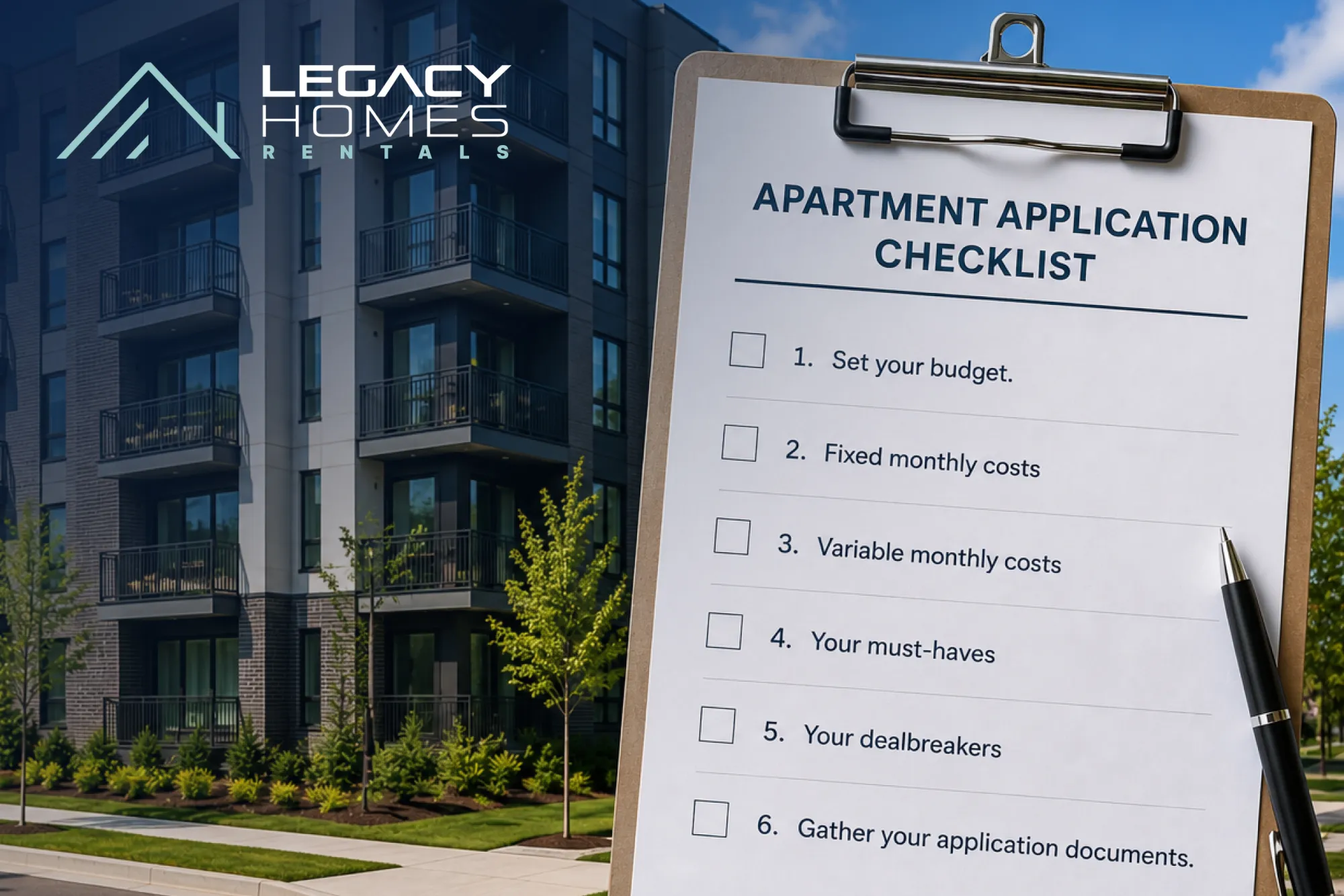
A first-time apartment renter checklist should cover the full rental process, not just what you need to buy after signing. Start with a realistic budget, prepare your application documents, inspect each apartment carefully, and verify every cost before you commit.
Most first-time renter guides cover one slice of the journey. Shopping lists start after the lease is signed, and application guides stop before you get the keys. This guide follows the full journey and reflects what property managers see first-time renters get right and get wrong.
In this guide, you’ll learn how much money to save, which documents to prepare, and what to inspect during a tour. You’ll also learn how to avoid rental scams, review a lease, document the unit's condition, and furnish your place without overbuying.
First-time apartment renter checklist at a glance
The easiest way to rent your first apartment is to follow the process in order and finish each phase before moving forward. Use this condensed checklist to see what you have already handled and what still needs your attention.
- Phase 1. Before searching: Set your housing budget, estimate upfront cash, choose your must-haves, and gather application documents.
- Phase 2. During tours: Inspect the unit, test what you can, check the neighborhood, and confirm what your rent includes.
- Phase 3. Before applying: Ask about fees and policies, verify the rental, then prepare complete and accurate application information.
- Phase 4. Before signing: Read the full lease, confirm every required payment, and understand renewal, notice, maintenance, and insurance terms.
- Phase 5. Before move-in: Arrange utilities, renters insurance, moving access, your address change, and the key handoff.
- Phase 6. At move-in: Document the apartment before unpacking, report existing damage, and bring only the essentials you need immediately.
- Phase 7. During your first week: Set up rent payments, save maintenance contacts, learn property procedures, and organize your rental records.

Before you start looking for your first apartment
Before you start looking for your first apartment, set your budget, estimate your upfront costs, decide what you need from the rental, and prepare your application documents. Taking care of these steps first helps you compare apartments based on what you can actually afford and use.
Here’s what you need to do as a first-time apartment renter:
1. Calculate how much apartment you can afford
A common starting point is spending no more than 30% of your gross monthly income on rent. HUD considers households cost burdened above that level because less remains for food, transportation, and savings.
Treat the 30% rule as a rule of thumb rather than a qualification standard. Many properties screen for income closer to three times the monthly rent, and a lower target helps if your other debts are high.
For example, 30% of $5,000 in gross monthly income is $1,500. If utilities and mandatory fees are separate, a $1,500 rent would exceed that benchmark.
2. Estimate your total monthly housing costs beyond rent
Your real monthly cost is the rent plus every recurring bill tied to the apartment. Separate your monthly housing expenses into fixed costs that stay the same and variable costs that change with usage.
A higher advertised rent can sometimes produce a lower total bill when more services are included. Compare the complete monthly obligation, not rent alone.
Here are the items you should factor in to your monthly housing costs when renting an apartment for the first time:
| Monthly cost | What to confirm |
|---|---|
| Base rent | Exact rent and due date |
| Utilities | What you pay directly or through the property |
| Parking | Required or optional monthly charges |
| Pet costs | Pet rent and separate pet fees |
| Renters insurance | Whether coverage is required |
| Internet or services | Providers and mandatory packages |
| Other charges | Trash, pest control, amenities, or resident-benefit fees |
3. Calculate how much money you need upfront to move in
Plan to have roughly 2 to 3 times the monthly rent saved before you apply. Upfront move-in costs split into refundable and nonrefundable buckets, and the difference tells you what comes back.
Here’s a quick breakdown of the upfront costs you’ll have to pay on your first apartment rental:
| Cost bucket | Common examples |
|---|---|
| Upfront, potentially refundable | Security deposit or other refundable deposits |
| Upfront, nonrefundable | Application, administrative, move-in, or permitted pet fees |
| Monthly fixed | Rent, parking, pet rent, required service packages |
| Monthly variable | Metered utilities, laundry, groceries, household supplies |
For example, if first month’s rent is $1,500, the refundable deposit is $1,500, and nonrefundable fees total $300, you need $3,300 before moving and setup costs. Actual deposits, fees, and timing vary by property and state.
4. Decide your apartment must-haves and dealbreakers
Choose the features that materially affect daily life, such as commute, parking, laundry, pets, accessibility, storage, and maximum total monthly cost. Separate requirements from preferences so an attractive extra does not distract you from a practical need.
Here are some examples:
- Must-haves: maximum rent, minimum bedrooms, commute time, parking, pet policy, and laundry access.
- Dealbreakers: anything that disqualifies a unit no matter how good the rest looks.
5. Get your application documents ready before you start searching
Prepare a secure folder with your photo ID, income documents, employer details, and reference information before you find the apartment you want. Do not send sensitive records through an unverified listing or person simply because they ask first.
What do you need to apply for your first apartment?
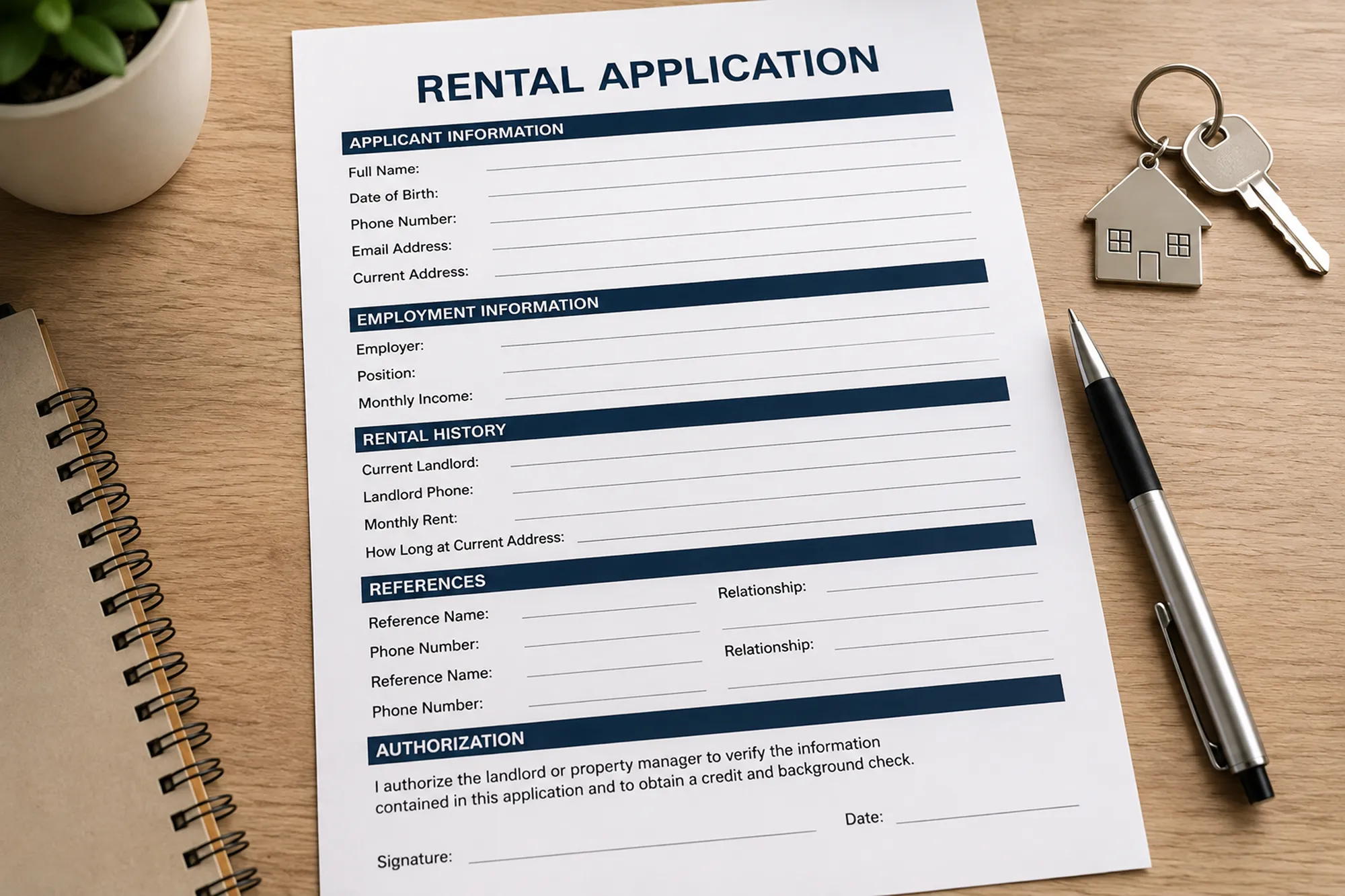
To apply for your first apartment, you will usually need proof of identity, income and employment information, screening details, references, and any required application payments. Exact documents and screening standards vary by property, so confirm the requirements before submitting.
Here are some items needed for first apartment application you should know:
1. Proof of identity
A government-issued photo ID is the standard identity document for a rental application, used to match you to the screening report.
- Driver's license, state ID, or passport.
- Social Security number or ITIN for the screening report, where required.
2. Proof of income and employment
Proof of income shows you can reliably cover the rent, and most properties want documents rather than a stated figure.
- Two to three recent pay stubs, or bank statements if you are paid irregularly.
- An offer letter with salary if you are starting a new job.
- Tax returns or 1099s if you are self-employed.
3. Credit and background screening information
Most properties run a tenant screening report that covers credit history, and it may include eviction and criminal history where permitted. You typically authorize the screening within the application itself.
If a property denies your application based on a screening report, the CFPB explains that the property management must tell you, identify the screening company, and let you dispute errors.
4. References and rental history
References let a property manager verify how you handled past obligations. Previous landlords carry the most weight, but managers know first-time renters rarely have one.
- Contact information for any previous landlord, if you have one.
- A current or former employer, plus one or two personal references.
5. Application fees, deposits, and other costs you may need to pay
Confirm every fee in writing before you apply, because application fees are usually nonrefundable even if you are denied.
- Application fee, typically charged per adult applicant.
- Holding deposit or administrative fee, and whether either is refundable if you withdraw.
- Security deposit amount and any move-in fees due at signing.
6. What can you provide if you have no rental history?
You can still rent without previous rental history, but the property may request other evidence of financial reliability.
Common alternatives include a co-signer or guarantor who meets the income requirement, proof of savings, an employer letter, or a larger deposit where state law allows it. Options vary by property, so ask first.
Some properties may allow another deposit arrangement where local law permits it. Confirm any alternative with the leasing team before applying.
What should you check when viewing an apartment?
When viewing an apartment, check its physical condition, appliances and utilities, signs of damage or pests, noise, parking, internet, neighborhood, and total monthly cost. The goal is to confirm that the apartment works for your daily life before you apply.
1. Inspect the apartment for damage and maintenance problems
Walk every room slowly and look past the staging, because damage you notice now can be raised before applying.
- Walls, ceilings, and floors: cracks, stains, soft spots, or fresh paint covering a repair.
- Doors and windows: smooth operation, working latches, and intact screens.
2. Check appliances, plumbing, heating, cooling, outlets, and locks
Test everything you are allowed to touch, because a rental inspection at turnover checks these same systems.
- Run faucets and check water pressure, drainage, and hot water speed.
- Flush toilets and look under sinks for moisture or corrosion.
- Run the appliances and test heat and air conditioning.
- Test outlets with a phone charger and check every lock.
3. Look for signs of pests, moisture, mold, or water damage
Pest and moisture problems are far easier to spot before you sign than to resolve after.
- Droppings, traps, or bait stations in cabinets and under sinks.
- Musty smells, ceiling stains, or bubbling paint suggesting water damage.
- Dark spotting around tubs, windowsills, and vents that suggests mold.
4. Check noise, parking, laundry, internet, and building access
Livability problems rarely appear in listings, so pause during the tour and listen for street noise, neighbors, and mechanical hum.
- Check parking at the hour you would park.
- Locate laundry, mailboxes, and trash areas.
- Ask which internet providers service the building.
5. Check the neighborhood before deciding
Visit the area at night and on a weekend before deciding. Time your actual commute from the front door, and note how close groceries, pharmacies, and transit sit.
6. Ask what is included in the rent and what costs extra
Two apartments with identical rent can differ by over a hundred dollars a month once fees are counted, so ask directly what rent includes. The FTC advises renters to get mandatory fees in writing instead of relying on the advertised price.
- Which utilities are included, and which are billed to you or split among units.
- Mandatory monthly fees: trash, pest control, amenity, or technology packages.
- Costs for parking, storage, and pets
Questions to ask before applying for an apartment
Ask about total cost, maintenance response, and renewal terms before paying an application fee, because these three areas cause the most first-year surprises.
1. What utilities and recurring fees will I pay?
Ask for every mandatory monthly charge beyond rent and which utilities must be placed in your name. If a fee changes by usage, ask how it is calculated and billed.
2. How much are the security deposit and move-in fees?
Confirm the deposit amount, application fee, administrative charges, and any other payment required before move-in. Ask which amounts are refundable and what conditions apply.
3. What are the pet, guest, parking, and roommate rules?
Ask about any policy that affects how you plan to use the home. Get restrictions, added fees, vehicle limits, and approval requirements in writing before applying.
4. How are repairs and maintenance requests handled?
Ask how residents submit routine requests, what number they use for emergencies, and who provides status updates. A clear process matters more than a vague promise that maintenance is “handled quickly.”
5. What are the lease renewal and rent increase policies?
Ask how renewal offers are communicated, how much notice you will receive, and whether the lease explains what happens after the initial term. Rent-increase rules and notice requirements vary by state and locality.
6. When would I get my security deposit back?
Ask what move-out steps affect deposit deductions and how the property handles the final condition review. Security-deposit return deadlines are governed by state law, so avoid assuming one nationwide timeline.
How to avoid rental scams when renting your first apartment
To avoid rental scams, verify the property and the person renting it before you send money, documents, or sensitive personal information. Be especially cautious when someone pressures you to pay immediately or prevents you from confirming that the rental is legitimate.
First-time renters are heavily targeted, and the FTC's rental listing scam guidance describes how scammers copy real listings and swap in their own contact details.
To avoid falling victims to these rental scams, make sure you perform the following:
1. Verify the property and person renting the apartment
Search the property address online for versions with a different owner, price, or company. Then confirm the listing exists on the management company's own website.
- Call the number on the company's website rather than the number in the ad.
- Search the company or owner name with words like "scam," "complaint," or "review."
- Check whether the address is also listed for sale, a common fake listing sign
2. See the apartment before sending money whenever possible
Legitimate rentals can be shown, and a refusal to show one is a serious warning sign. Tour the property in person when you can, or ask someone you trust to visit if you are relocating. A video tour can help, but the FTC notes that scammers can also misuse self-tour systems.
3. Be cautious about pressure to pay immediately
Urgency is a manipulation tool, because rushed people skip verification. A legitimate property manager will hold a unit through a normal application process. Requests for wire transfers, gift cards, or cryptocurrency before a lease exists are classic rental scam red flags.
4. Confirm what you are paying for before sharing money or personal information
Get an itemized, written list of every charge before paying anything, and know whether each payment is refundable. Share your Social Security number and financial documents only after you have verified the property and the person.
What should you check before signing your first apartment lease?
Read the entire lease and confirm every dollar amount in writing before signing. A lease is a binding contract, and landlord-tenant rules vary by state, so HUD's state tenant rights pages are a useful reference for your local rules.
1. Confirm the rent, security deposit, fees, and utilities in writing
Every number you were quoted should appear in the lease agreement exactly as quoted, because verbal promises are difficult to enforce and written terms govern at move-out.
At Legacy Signature Rentals, rent, deposit, and all recurring fees are confirmed in writing before a resident signs.
2. Check the lease start date, end date, and renewal terms
Confirm the exact start date, because rent and utility responsibility usually begin that day. Then check the end date, since some leases convert to month-to-month while others auto-renew unless you give notice.
3. Review late fees, notice requirements, and early termination rules
Find the rent due date, the grace period if any, and the exact late fee structure. Then find the move-out notice requirement, which is commonly 30 to 60 days.
Read the early termination clause even if you plan to stay. Jobs change, so know the cost of breaking the lease in advance.
4. Understand maintenance and repair responsibilities
The lease should state which repairs the landlord handles and which small tasks fall to you, such as air filter changes and reporting leaks. Confirm how repair requests must be submitted, because some leases require them in writing.
5. Check rules for pets, guests, roommates, parking, and subletting
Lifestyle rules in a lease are enforceable. Violating a pet or subletting clause can trigger fees or lease termination, so read the limits on pets, guest stays, roommates, and parking before signing.
6. Review renters insurance requirements
Many leases require renters insurance with a minimum liability amount, and proof is often due before key handoff. The landlord's insurance covers the building, so your belongings are covered only by your own policy.
7. Clarify anything you do not understand before signing
Ask about every clause you cannot explain in your own words. If a spoken answer contradicts the written lease, ask for the lease to be corrected before signing, since the document is what controls.
What should you do before moving into your first apartment?
Before moving into your first apartment, set up required utilities, arrange renters insurance, confirm your moving schedule, update your address, and verify how you will receive keys and property access. Start these tasks as soon as your lease and move-in date are confirmed.
Here’s what you need to do before moving in to your first apartment:
1. Set up electricity, water, gas, internet, and other utilities
Contact required providers about one to two weeks before move-in when possible. Schedule service for the date you become responsible for the home and save each confirmation.
Ask which utilities stay in the property’s name and which must be transferred to yours. Some managers require active-service proof before releasing keys.
2. Get renters insurance before your lease requires it
If insurance is required, arrange it early enough to provide proof before the deadline. Confirm the property address, required liability limit, and any interested-party instructions.
3. Schedule your move and confirm building move-in rules
Reserve movers, a truck, elevator time, or loading access once the property’s procedures are clear. Ask about move-in hours, parking, gate access, and large-delivery restrictions.
4. Update your address and important accounts
Submit your postal change of address and update banks, employers, subscriptions, insurance, and other important accounts. USPS forwarding begins on the start date you provide, but notify important senders directly.
5. Confirm how you will receive keys, parking access, and mailbox access
Before move-in, confirm the key pickup time and what you must bring. Also ask about permits, gate credentials, mailbox keys, entry codes, and package access.
Complete your apartment move-in inspection before unpacking

Complete your apartment move-in inspection before unpacking by photographing the unit, recording existing damage, testing major fixtures and appliances, and reporting problems in writing. This creates a clear record of the apartment’s condition when your tenancy begins.
Here’s what you need to do before you unpack your things on your first apartment:
1. Take timestamped photos and videos of the apartment
Photograph every room before unpacking, including wide views and close-ups of damage. Save the original files somewhere secure so their date information is easy to retrieve.
2. Document existing damage in every room
Record scratches, stains, dents, cracked surfaces, damaged blinds, missing hardware, and other existing conditions. Include closets, cabinets, doors, windows, floors, walls, ceilings, and assigned outdoor areas.
3. Test appliances, plumbing, outlets, locks, windows, and safety equipment
Test appliances, faucets, toilets, drains, locks, and windows where applicable. Confirm required safety alarms are present and report problems instead of modifying equipment yourself.
4. Report existing problems to the landlord or property manager in writing
Complete the property’s condition report within the required timeframe and attach photos when possible. Keep the message or portal record showing when you reported the issue.
5. Keep your move-in inspection and photos for your records
Store the inspection report with your lease, insurance, payment records, and property communications. Keep these records through move-out and until any deposit questions are resolved.
First apartment essentials checklist
Your first apartment essentials should cover the basic items you need to cook, sleep, use the bathroom, clean, handle small household tasks, and respond to minor emergencies. Check what the apartment already provides before buying anything so you do not spend money on duplicates.
Here are some things you need for your first apartment:
Kitchen essentials
- One basic set of plates, bowls, cups, and utensils
- One pot and one pan you will actually use
- Chef’s knife and cutting board
- Can opener and basic cooking utensils
- Dish soap, sponge, and kitchen towels
- Trash bags and food-storage containers
- A few groceries for your first several meals
Bathroom essentials
- Toilet paper and hand soap
- Bath towels and basic toiletries
- Plunger
- Shower curtain or liner if the bathroom needs one
- Bath mat if the floor becomes slippery
- Small trash can if one is not provided
Bedroom essentials
- Mattress or sleeping setup
- Sheets, blanket, and pillows
- Hangers for the storage you already have
- Laundry hamper or basket
- Window covering only if the property does not provide one and the lease allows it
Cleaning and laundry essentials
- All-purpose cleaner appropriate for the surfaces
- Broom, vacuum, or mop based on your flooring
- Cleaning cloths or paper towels
- Laundry detergent
- Trash bags
- Basic dish and bathroom cleaning supplies
Basic tools and household supplies
- Screwdriver set and small hammer
- Tape measure
- Flashlight and batteries
- Approved power strip or extension cord only where appropriate
- Light bulbs only after confirming which fixtures are your responsibility
- Scissors, tape, and a small supply of basic hardware permitted by your lease
Safety and emergency essentials
- First-aid kit
- Flashlight with working batteries
- Emergency and maintenance contact information
- Any personal medication or emergency supplies you regularly need
- Fire extinguisher only if one is not already provided and responsibility is yours
👉 Important: Confirm required smoke alarms, carbon-monoxide alarms where applicable, and other building safety equipment with the property manager. Safety equipment may be the landlord’s responsibility under local rules, so do not duplicate or alter it without checking.
What do you actually need on the first day in your apartment?
On your first day in an apartment, you mainly need enough supplies to sleep, shower, eat, clean up, charge your phone, and handle basic household needs. Furniture, decor, specialty appliances, and most organization products can wait.
Here are some things you need to prepare and do once you’ve move in to your apartment:
1. Pack a first-night box you can access immediately
Keep one clearly labeled box or bag separate from the moving load. Pack toilet paper, soap, towels, toiletries, medications, chargers, bedding, a change of clothes, water, simple food, trash bags, and basic cleaning supplies.
Add your lease, key instructions, parking information, and a small tool kit. You should be able to get through the first night without opening ten different boxes.
2. Buy necessities before furniture and decor
Spend your first dollars on items that let you cook, clean, sleep, and use the bathroom. A sofa or television can wait if buying it would leave you short on rent, groceries, utilities, or an emergency cushion.
3. Wait until you move in before buying items you may not need
Measure rooms, doors, closets, and wall space before ordering furniture or storage. Living in the apartment for several days also shows which items would solve a real problem instead of filling empty space.
What can you buy later for your first apartment?
You can usually buy extra furniture, specialty kitchen appliances, storage systems, and decor after moving into your first apartment. These items are easier to choose once you have measured the space and know what you actually use.
1. Furniture you can add gradually
Side tables, coffee tables, extra seating, dining furniture, a television stand, and decorative shelving can usually wait. Secondhand furniture can save money, but inspect its condition carefully before bringing it home.
2. Kitchen appliances and accessories you may not need immediately
Air fryers, stand mixers, specialty coffee equipment, duplicate cookware, serving sets, and other single-purpose tools are optional for many renters. Buy them after you know your cooking habits and available counter space.
3. Storage and organization items to buy after measuring your space
Do not buy bins, shelving, drawer organizers, or closet systems based on guesswork. Measure first, unpack what you own, then buy storage for a specific need.
4. Decor and other optional purchases
Rugs, artwork, plants, decorative pillows, lamps, and matching accessories can be added slowly. Check lease rules before hanging, painting, mounting, or making any change that could damage walls or surfaces.
What should you do during your first week in a new apartment?
During your first week in a new apartment, set up rent payments, save maintenance contacts, learn property procedures, confirm everything is working, and organize your rental documents. Completing these administrative tasks early makes the rest of your tenancy easier to manage.
Make sure you perform the following tasks on your first week after moving in:
1. Set up rent payments and payment reminders
Confirm where and how rent is paid, then add the due date to your calendar. If the property offers autopay, review the withdrawal date and account balance requirements before turning it on.
Here at Legacy Signature Rentals, you can easily set up your auto-payments on your own resident portal account. It will also allow you to make maintenance requests 24/7!
2. Save your landlord or property manager’s maintenance contact information
Save both the routine maintenance process and the emergency contact method in your phone. Knowing the correct channel helps your request reach the right person instead of getting lost in a general inbox.
3. Learn the property’s trash, recycling, laundry, and parking procedures
Find collection days, dumpster locations, laundry hours, guest parking rules, and any permit requirements. These details are easy to overlook during move-in but affect everyday life quickly.
4. Confirm that utilities, appliances, locks, and building access are working correctly
Report problems as soon as you notice them through the property’s approved maintenance channel. Keep written confirmation for anything connected to your move-in condition report.
5. Store your lease, insurance policy, inspection report, and rental documents together
Create one digital folder for your signed lease, addenda, insurance, inspection records, payment confirmations, utility accounts, and important messages. You will save time whenever you need to check a rule or prove what was reported.
Common first-time apartment renter mistakes to avoid
Common first-time renter mistakes include focusing only on advertised rent, applying before checking fees, sending money too early, skipping the full lease, failing to document damage, and buying too much before move-in.
Most of these problems can be avoided by confirming costs, rules, and property conditions before you commit.
1. Choosing an apartment based only on the advertised rent
The advertised rent is the floor of your monthly cost, never the total, and the real number often runs $100 to $300 higher. Use the monthly cost checklist in the budgeting section before comparing units.
2. Applying before confirming all fees and requirements
Applying blind wastes nonrefundable fees on properties you would have ruled out. Confirm fees, deposits, and screening requirements in writing first, using the questions section above.
3. Sending money before verifying the rental
Deposits sent to unverified listings are rarely recovered. Complete the verification steps in the scam section before any money or personal information changes hands.
4. Signing a lease without reading the full agreement
Unread clauses about auto-renewal, late fees, and early termination become expensive surprises. Use the lease review checklist above to slow down on the clauses that matter most.
5. Failing to document the apartment's condition before moving in
Undocumented existing damage can come out of your security deposit at move-out. The move-in inspection section gives you the photo list and reporting steps.
6. Buying everything for the apartment before you move
Overbuying is the most common first-apartment budget leak. Follow the first-night box and priority tiers above, and let the apartment tell you what it needs.
7. Forgetting to budget for recurring household expenses
Rent gets budgeted while utilities, laundry, and household restocking get forgotten. Build the fixed and variable lists from the budgeting section into your monthly plan.
Get complete move-in assistance when you rent at Legacy Signature Rentals
Legacy Signature Rentals builds and manages rental homes across North Carolina and Texas, and our team walks first-time renters through every phase of this checklist. We explain application requirements upfront, confirm fees in writing, and answer lease questions before you sign.
As a Legacy resident, you can use our online portal to pay rent, set automatic payments, and submit maintenance requests. It’s also where you can communicate with management and provide renters insurance information. Those systems give you clear places to handle the administrative tasks covered in this checklist.
When you are ready to look for a rental, feel free to browse our available homes in NC or TX. Our leasing team will guide you every step of the way, from choosing a rental home, touring, and throughout the entire duration of your lease!

Frequently asked questions about renting your first apartment
How much money should I save before renting my first apartment?
Save two to three times one month's rent, roughly $3,000 to $4,500 on a $1,500 apartment, before renting your first apartment. That total covers the security deposit, first month's rent, application fees, and utility setup, with a cushion for moving costs. Confirm exact move-in amounts in writing before you apply.
How far in advance should I start looking for my first apartment?
Start looking for your first apartment 30 to 60 days before your target move-in date. Most rental listings post within 60 days of the unit's availability, so earlier searching surfaces homes you cannot hold. Spend the months before that window saving for upfront costs and gathering your application documents instead.
Can I rent an apartment without previous rental history?
Yes, you can rent an apartment without rental history. Property managers approve first-time renters based on income, employment, and screening results. A co-signer or guarantor, proof of savings, or an employer letter can strengthen a first application. Accepted alternatives vary by property, so ask each community what it accepts before applying.
What credit score do you need to rent your first apartment?
Credit score requirements for a first apartment vary by property, because each community sets its own screening criteria. Many property managers review the full credit report, weighing income and payment history rather than relying on a single number. If your credit history is limited, ask whether a co-signer or a larger deposit is accepted.
How long does an apartment application usually take?
Most apartment applications take one to three business days after every required document is submitted. Missing pay stubs, unreachable references, and incomplete forms cause most delays, so a complete application is the fastest application. Our guide on how long an apartment application takes breaks down each step in the review.
What should I bring when touring an apartment?
Bring your phone, a tape measure, and a written list of must-haves and questions when touring an apartment. The phone handles photos, notes, and outlet testing with a charger. Carrying your application documents lets you apply the same day when a unit fits and the local rental market moves quickly.
What should I buy first for a new apartment?
Buy sleep, bathroom, and cleaning basics first for a new apartment: a mattress, bedding, a shower curtain, towels, toilet paper, and all-purpose cleaner. Add kitchen basics and a plunger during the first week. Hold furniture and decor purchases until you have lived in the space and know what it needs.
Do first-time renters need renters insurance?
Most first-time renters need renters insurance because many leases require an active policy before key handoff. Even when optional, renters insurance covers your belongings and personal liability, which the landlord's building policy excludes. Check your lease for the liability minimum and whether the property must be listed on your policy.